 Cedar-IBSi FinTech Labs
 Analyst Briefings
 Get in touch
 Back
Back
FinregE unveils blueprint for safe AI adoption in financial supervision
By Puja Sharma
 Drawing on eight years of production experience, the RegTech leader advocates for infrastructure-first upgrades over model-centric approaches.
FinregE, the end-to-end regulatory operating system, has released a strategic framework designed to help financial regulators safely integrate Artificial Intelligence into supervisory workflows.
The report comes amid growing concerns over a “supervisory gap.” According to the Cambridge Centre for Alternative Finance (CCAF), only 18% of regulators are currently scaling AI, while 40% of the firms they oversee are already transforming operations via AI. FinregE’s blueprint argues that the path to “regulator-grade” AI is not found in off-the-shelf software, but in the foundational digitisation of regulatory rules.
“The AI gap is real, but the solution is not another strategy paper,” said Rohini Gupta, CEO of FinregE. “We are advocating for a shift toward structured digital infrastructure. By moving from static documents to machine-readable data, regulators can deploy AI that is explainable, traceable, and free from the hallucinations that plague standard LLMs.”
The framework identifies five foundational pillars for adoption:
- Machine-Readable Rulebooks: Rules must be structured as data rather than documents, allowing systems to interpret regulations programmatically.
- Formal Taxonomy: A mapping of how provisions relate and how obligations trace to the source ensures consistency across jurisdictions.
- Dynamic Public Access: Replacing static PDFs with interfaces that reduce navigation burdens for firms improves compliance efficiency.
- Explainable AI: Applications must be built on structured content to ensure answers are traceable and auditable, mitigating the risk of hallucinations.
- Internal Operational Tooling: Systems should support workflows like consultation analysis and supervision triage to enhance internal efficiency.
Drawing on eight years of experience running AI in live regulatory environments, FinregE emphasises that the future of oversight depends on “structured intelligence” to maintain legitimacy and trust in an AI-driven market.
“To police the algorithms of the future, regulators must first digitise the rules of the present,” Gupta noted. “Our analysis shows that AI is only as good as the infrastructure it sits on top of. Progress requires a partnership with organisations that understand that the future of regulation is not just intelligent, but structured. Investing in this infrastructure compounds value, unlocking AI capability faster than expected while safeguarding legitimacy.”
Founded in 2018 by seasoned compliance and technology experts and with strategic investment from Moody’s Corporation in 2026, FinregE combines deep regulatory insight with advanced AI, natural language processing and machine learning to deliver compliance at scale. Built for clients in highly regulated industries, FinregE is trusted by leading financial services firms, corporates and influential regulators.



IBSi FinTech Journal
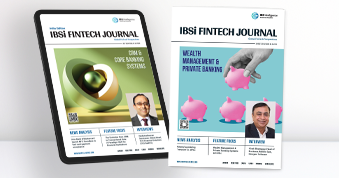
- Most trusted FinTech journal since 1991
- Digital monthly issue
- 60+ pages of research, analysis, interviews, opinions, and rankings
Other Related News
Today
Building a Global Money Movement Infrastructure: Interview with Ran Grushkowsky, Co-founder & CEO of MassPay
Read MoreRelated Reports
US FinTech Market Landscape & Vendor Analysis 2026
Know More
Global Digital Banking Market Landscape & Vendor Analysis Q2 2026
Know More
Wealth Management & Private Banking Systems Report Q4 2025
Know More
US FinTech Market Landscape & Vendor Analysis 2026
Know More