 Cedar-IBSi FinTech Labs
 Analyst Briefings
 Get in touch
 Back
The Weekly Wrap: all you need to know by Friday COB | Oct 23rd
By Puja Sharma

The Weekly Wrap is published every Friday and recaps the week’s main stories and deals, as well as upcoming events and announcements for Prime subscribers only.
The Big Story
Why it matters: By moving to Temenos SaaS, Kingdom Bank gains greater scalability, improved compliance capabilities and faster integration with payment ecosystems. The deal also demonstrates growing adoption of banking-as-a-service and SaaS-based core banking models among specialist banks seeking to enhance customer experiences while improving operational resilience.
Kingdom Bank, a UK bank focused on serving Christian churches, charities and individuals, has gone live on Temenos SaaS running on Microsoft Azure, implementing Temenos Core, Payments and Financial Crime Mitigation solutions to strengthen operational resilience and support future growth.
The move replaces a range of siloed legacy systems with Temenos’ cloud-native banking platform, enabling the bank to streamline operations, reduce manual processes and scale more efficiently while maintaining the personalised service model it offers customers.
The new platform provides Kingdom Bank with enhanced agility to respond to changing customer demands and regulatory requirements. Through Temenos’ API-based architecture, the bank can also integrate more effectively with third-party providers, including its clearing partner, allowing it to deliver near-real-time clearing and an improved payments experience. Kingdom Bank offers savings products to customers seeking banking services aligned with Christian values while providing mortgages to churches, charities and ministry workers who may face challenges obtaining financing through traditional channels. By adopting Temenos SaaS, the bank gains a resilient and scalable technology foundation that allows it to focus on its mission and customer services rather than managing complex banking infrastructure. The implementation reflects a broader trend among smaller and specialist banks that are adopting cloud-based core banking platforms to improve operational efficiency, accelerate innovation and meet evolving customer expectations without the burden of maintaining legacy technology environments.
Deals of the week
- Hyperlayer raises £19.5m to expand banking modernisation platform
- BRAC Bank goes live with Finastra and Conpend Trade AI Solutions
- Pine Labs and WEBXPAY partner for cross-border payments in Sri Lanka
- First Citizens partners with NCR Atleos to expand ATM network
- Karta AI raises $3m led by PeerCapital and Cedar Hill Capital to scale agentic inbound voice AI for Financial Services
- Dougs secures €50m investment to scale AI automation
- Marqeta enables Square Credit Card on its card issuing platform
- Jack Henry expands Google Cloud partnership for tokenised deposits
Be on the lookout for
Global FinTech mergers and acquisitions (M&A) activity is showing signs of recovery as the industry approaches the final quarter of 2026, although investors remain cautious about valuations, according to a report by D.A. Davidson. While fundraising and dealmaking slowed over the summer, strategic buyers and private investors continue to show interest in established FinTech businesses with strong fundamentals.
FinTech valuations have declined across several segments as investors reassess growth prospects and business performance. Revenue multiples in multiple categories have fallen since September 2025, reflecting greater scrutiny of companies’ financial performance and future potential.
Acquirers are also placing greater emphasis on customer retention and distribution than on technology alone. As FinTech products become easier to replicate and innovation cycles shorten, businesses with established customer relationships, broad distribution networks and deep integration into clients’ operations are becoming more attractive acquisition targets.
Profitability is another key factor shaping valuations. Multiples for loss-making FinTech companies have contracted, while profitable businesses have largely maintained their valuation levels. This reflects a stronger preference for sustainable growth and clearer earnings prospects.
Valuations also differ considerably across FinTech segments. Exchanges and liquidity providers command higher revenue multiples than payment companies, reflecting differences in their business models, profitability and market positions.
IBSi FinTech Journal
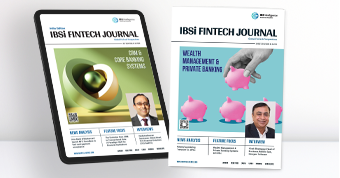
- Most trusted FinTech journal since 1991
- Digital monthly issue
- 60+ pages of research, analysis, interviews, opinions, and rankings
Other Related News
Related Reports
US FinTech Market Landscape & Vendor Analysis 2026
Know More
Global Digital Banking Market Landscape & Vendor Analysis Q2 2026
Know More
Wealth Management & Private Banking Systems Report Q4 2025
Know More
US FinTech Market Landscape & Vendor Analysis 2026
Know More