 Cedar-IBSi FinTech Labs
 Analyst Briefings
 Get in touch
 Back
Back
Global payments are not broken, incentives are

By George Davis, CEO and Founder of Lorum
The default explanation for friction in global settlement is that infrastructure is outdated. There is truth in that. But it only tells part of the story, and building strategy around half a diagnosis leads to half a solution.
The deeper issue is that clearing and settlement largely sit inside institutions whose primary economics are built around lending. Balance sheet utilisation, credit exposure and net interest margin come first. Settlement comes second. Not because banks are failing, but because they are doing exactly what they were built to do.
That distinction matters. It means that delays, trapped liquidity, extended settlement windows and pre-funding burdens are not always signs of broken rails. They are the predictable result of clearing being housed inside institutions that optimise for something else entirely.
Better rails alone will not fix this
Much of the industry still frames the answer too narrowly. Faster messaging, cleaner interfaces, new instruction layers: all useful, but none of them address the incentive structure underneath. A payment can look modern at the front end while still moving through cut-offs, multiple hand-offs, competing treasury priorities and liquidity constraints behind the scenes.
The same applies to newer instruments. Stablecoins, tokenised value and orchestration layers introduce flexibility in how funds are represented and routed. But settlement still depends on liquidity being available at the right moment, exposure being managed appropriately and institutions making decisions within the logic of their own economic model. Changing the instrument does not, by itself, resolve clearing.
What this looks like in practice
Consider a fintech platform settling payroll across five currencies. Each leg of that payment passes through a correspondent chain where the intermediary bank is simultaneously managing its own lending book, treasury position and intraday liquidity. The platform’s settlement is real, but it competes with the bank’s primary revenue activity for the same liquidity. When volumes spike or cut-off windows tighten, the platform’s funds wait. Not because the infrastructure failed, but because the institution’s priorities sit elsewhere. That pattern repeats across the correspondent banking system. BIS CPMI research has documented a sustained contraction in active correspondent banking relationships, particularly across the Americas. Idle funds in nostro buffers. Repeated compliance steps at each intermediary. Fragmented cash management across multiple banking relationships. These are not isolated inefficiencies. They are the structural consequence of clearing being treated as a secondary function.
Clearing needs to stand on its own
If the objective is settlement certainty, stronger liquidity planning and lower operational friction, clearing cannot remain a by-product of lending economics. It needs to sit within institutions designed specifically for movement: specialist correspondent institutions with safeguarded client funds, direct local scheme access, appropriate custody structures and a simpler correspondent chain.
This is not about replacing banks or recycling disruption language. Clearing, custody and cash management are fiduciary services. They work best when they sit inside a non-lending model where the institution’s entire incentive structure is aligned with moving funds predictably and transparently. No competing lending book. No conflicting balance sheet priorities. The FSB’s work on correspondent banking illustrates just how structurally entrenched these dynamics have become across global corridors.
Until the economics of clearing change, settlement outcomes will follow the incentives of the institutions that control it. The market will keep improving the surface while leaving the centre untouched.
IBSi News

Get the IBSi FinTech Journal India Edition
- Insightful Financial Technology News Analysis
- Leadership Interviews from the Indian FinTech Ecosystem
- Expert Perspectives from the Executive Team
- Snapshots of Industry Deals, Events & Insights
- An India FinTech Case Study
- Monthly issues of the iconic global IBSi FinTech Journal
- Attend a webinar hosted by the magazine once during your subscription period
₹200 ₹99*/month
* Discounted Offer for a Limited Period on a 12-month Subscription
IBSi FinTech Journal
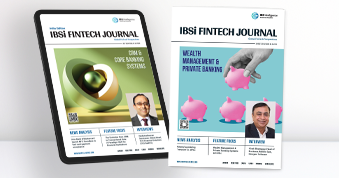
- Most trusted FinTech journal since 1991
- Digital monthly issue
- 60+ pages of research, analysis, interviews, opinions, and rankings
Other Related Blogs
September 15, 2026
Private credit has Matured. Operational Excellence is the Next Differentiator
Read MoreRelated Reports
US FinTech Market Landscape & Vendor Analysis 2026
Know More
Global Digital Banking Market Landscape & Vendor Analysis Q2 2026
Know More
Wealth Management & Private Banking Systems Report Q4 2025
Know More
US FinTech Market Landscape & Vendor Analysis 2026
Know More