 Cedar-IBSi FinTech Labs
 Analyst Briefings
 Get in touch
 Back
Back
Gig‑speed payments are the new worker lifeline

By Jim Haug, SVP, Managing Director, Kotapay
The gig economy has changed how workers think about payment speed. A driver can finish a shift and see money in their account within minutes, while a full‑time employee in a traditional job may wait two weeks or more for their paycheck. When workers live in both worlds, that timing gap increasingly feels like a disadvantage.
At the same time, many households are managing expenses with very little buffer. Bills, childcare, gas, and debt payments don’t always line up neatly with a fixed pay date, which is why access to earnings between paychecks has become so important.
How gig‑fast pay highlights W‑2 financial stress
Gig workers often rely on instant payouts to bridge short‑term gaps. A portion of today’s earnings may cover fuel for tomorrow’s shifts, keep a utility bill current, or prevent an overdraft fee when a payment posts sooner than expected.
Traditional W‑2 employees face similar pressure, but many still have to wait for the full pay cycle to receive any of their wages. When an unexpected expense lands between paychecks, they may have few options beyond high‑cost credit or fees.
Research on financial wellness indicates that 60% of employees cite financial stress as their primary concern, and that stress translates into billions of dollars in lost productivity each week when workers cannot access wages they have already earned.
Why workers are judging jobs by payout speed
One study of gig workers found that 80% select jobs based purely on how quickly they get paid, and 44% would leave if instant pay slowed down or became more expensive. Those same workers bring similar expectations to W‑2 roles.
More broadly, 78% of workers say they want faster access to their wages, while 62% report that their current pay schedule does not match their financial situation. When two jobs offer comparable wages but only one lets employees reach part of their earnings sooner, payout speed becomes a deciding factor.
The real constraint: funding and settlement timing
Modern systems can calculate wages, deductions, and taxes in seconds, and they do so reliably for employers of all sizes. The delay happens when it is time to move funds from the employer’s account to employees’ accounts.
Many employers still fund payroll days ahead of payday due to originating bank (ODFI) funding requirements and ACH cutoff times. That early funding ties up working capital and enforces a rigid schedule that rarely aligns with employees’ need for flexibility.
Traditional ACH operates on batch cycles and fixed windows, which means processors often require earlier funding to manage risk, even though wages have already been calculated. In contrast, faster payment options—instant payments and same‑day ACH—offer quicker settlement, allowing employers to fund closer to payday while maintaining confidence that employees will be paid on time.
Why payroll providers are best positioned to bring gig speed to W‑2 workers
Payroll providers already connect employer payroll files, banking relationships, and employee accounts, and they manage compliance, fraud controls, and exceptions. That vantage point gives them the ability to introduce gig‑style payout speed across a broad base of employers without requiring major system changes.
By working with banks that have ODFI status and embedding faster payment rails into existing workflows, providers can enable employers to change funding timing and payout options while keeping familiar processes. Instead of asking every employer to adopt a separate wage access solution, payroll processors can offer faster access within the payroll environment clients already use.
How instant payments and same‑day ACH layer onto existing cycles
The most practical path forward is to layer new payment options onto current pay cycles, rather than replace those cycles outright. Two approaches are emerging:
- Same‑day ACH for off‑cycle payments. When employees face urgent or one‑off expenses, employers can use same‑day ACH to send off‑cycle payments that arrive more quickly than the next scheduled payroll. This can be particularly useful for corrections, bonuses, or emergency assistance.
- Just‑in‑time payroll funding. With faster settlement, employers can fund payroll accounts on the morning of payday instead of days in advance—a model we refer to as “windowless payroll.” Cash leaves the operating account closer to the time employees are paid, improving liquidity without changing how employees receive deposits.
The key change in these approaches is the introduction of options that give employees earlier access when needed and give employers more control over when funds are committed.
What this means for employers and processors
For employers, faster access to wages is becoming part of a broader strategy to attract and retain workers. By offering gig‑style payout options through their payroll provider, organisations can respond to workers’ financial realities without redesigning HR systems or taking on additional operational risk.
For payroll processors, this shift represents both a client retention challenge and an opportunity. Processors whose platforms support instant payments and same‑day ACH, embedded within existing workflows, can help clients meet rising expectations for payout speed and differentiate themselves in a competitive marketplace. In doing so, they turn payout timing from a source of friction into a tangible advantage for the employers they serve—and into a lifeline for workers who are increasingly judging every job by how quickly it turns their time into money in the bank.
IBSi News

October 19, 2026
AI
Small transfers dominate stablecoin activity on BNB Chain, study shows
Read MoreGet the IBSi FinTech Journal India Edition
- Insightful Financial Technology News Analysis
- Leadership Interviews from the Indian FinTech Ecosystem
- Expert Perspectives from the Executive Team
- Snapshots of Industry Deals, Events & Insights
- An India FinTech Case Study
- Monthly issues of the iconic global IBSi FinTech Journal
- Attend a webinar hosted by the magazine once during your subscription period
₹200 ₹99*/month
* Discounted Offer for a Limited Period on a 12-month Subscription
IBSi FinTech Journal
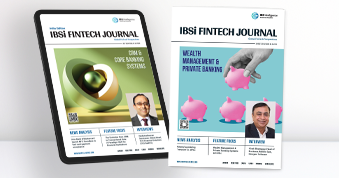
- Most trusted FinTech journal since 1991
- Digital monthly issue
- 60+ pages of research, analysis, interviews, opinions, and rankings
Other Related Blogs
October 14, 2026
Agentic AI could transform UK banks – but only if they stop playing it safe
Read MoreRelated Reports
US FinTech Market Landscape & Vendor Analysis 2026
Know More
Global Digital Banking Market Landscape & Vendor Analysis Q2 2026
Know More
Wealth Management & Private Banking Systems Report Q4 2025
Know More
US FinTech Market Landscape & Vendor Analysis 2026
Know More