 Cedar-IBSi FinTech Labs
 Analyst Briefings
 Get in touch
 Back
Back
Banks rethink merchant growth: Interview with Raman Khanduja, Co-Founder and CEO at Mintoak
By Puja Sharma

As India’s merchant ecosystem matures, the focus is shifting from payments adoption to unlocking deeper value through merchant intelligence, embedded finance, and software-led engagement. The next phase will be defined by how effectively banks and fintechs collaborate to turn high-frequency payment interactions into actionable insights, driving growth, efficiency, and stronger SME relationships.
In conversation with Raman Khanduja, Co-founder & CEO of Mintoak, IBS Intelligence explored how India’s merchant ecosystem is evolving beyond payments into a data-driven growth engine. By building on UPI’s scale, Mintoak is enabling banks to transform payment touchpoints into platforms for merchant intelligence, embedded finance, and deeper SME engagement.
How are global tensions accelerating merchant digitisation in India?
Global tensions have accelerated digitisation in some markets, but India’s merchant digitisation, led by Unified Payments Interface (UPI), has largely been independent of these factors. UPI’s rapid growth has been driven by strong public digital infrastructure, regulatory push, deep bank participation, interoperable rails, zero/low MDR, and simple QR-led acceptance. Its scale, over 60 million merchants and 13 billion monthly transactions, shows that merchant payments in India are already deeply digitised. The real gap is not in adoption, but in depth of usage. Most merchants use UPI as a basic collection tool, without integrating it into workflows such as accounting, inventory, or credit access. So while payments are digitised, businesses are not fully digitised yet. The next phase is about building on top of UPI to enable merchant intelligence, embedded finance, and business tools.
If payments don’t drive revenue, where will merchant/banks derive value come from?
Payments are foundational, but they are not where the long-term value lies. For SMEs, payments are the most critical and frequent business activity. By default, they are also the most engaging touchpoint a merchant has with any platform. This creates a unique advantage: whoever owns the payment interface owns the daily interaction with the business. What’s changed now is that payments are no longer just core processing; they’ve evolved into software-led experiences delivered through apps. This shift combines high engagement with low-friction distribution, opening a powerful monetisation layer on top. Every transaction generates rich, real-time data. That data can be used to unlock high-value services such as working capital access, inventory and cash flow insights, customer analytics, and broader business management tools.
How is Mintoak helping banks move beyond payments into merchant operations and growth?
Banks have historically owned payments infrastructure such as processing, reconciliation, and settlement, but this layer is now commoditised. Their primary revenue stream, MDR, is low margin and under constant pressure. At the same time, while banks have strong merchant distribution, their engagement has been limited, largely restricted to devices and periodic financial touchpoints. Mintoak helps banks shift from infrastructure ownership to merchant engagement. We layer a software-led platform on top of their existing rails, turning payments into a high-frequency digital interface that combines acceptance, business tools, and value-added services in one place.
This allows banks to do two things:
• Monetise beyond MDR through data-driven services like lending, insights, and commerce enablement
• Deepen relationships by converting merchants into full SME customers of the bank
In essence, we help banks move from being transaction processors to becoming growth partners for their merchants. As a result, value is shifting from the act of transacting to enabling merchants to grow and operate better. Platforms that sit on top of payments, offering intelligence, automation, and embedded financial services, will capture a disproportionate share of revenue. In that sense, payments are the entry point. The real value lies in what you build on top of them.
Is FinTech shifting from disruption to collaboration with banks?
The early phase of FinTech was defined by disruption, driven by the need to reimagine user experience and accessibility. Today, the shift is clearly towards collaboration, especially in large and underpenetrated markets. Solving financial services at scale in these markets requires a combination of trust and technology.
Trust is critical when it comes to money, and banks bring that along with deep distribution and regulatory strength. FinTechs, on the other hand, bring agility, innovation, and purpose-built technology. There is now a clear realisation that neither can solve the problem alone. The most effective models combine the strengths of both. This collaboration enables faster deployment, wider reach, and more relevant solutions for merchants whose needs span payments, credit, and business operations. In that sense, FinTech is no longer disrupting banks. It is helping banks become more relevant while providing the foundation for FinTech to scale.
What will define the next phase: payments, embedded finance, or merchant intelligence?
The next phase will not be defined by payments, embedded finance, or merchant intelligence in isolation, but by how effectively they are integrated. Payments will remain the foundation as the most frequent and engaging touchpoint. Embedded finance will expand access to credit and financial services at the point of need. But the real differentiator will be merchant intelligence. The ability to convert transaction data into clear, actionable insights will determine which platforms truly add value. Merchants do not just need tools; they need guidance on how to manage cash flow, optimise operations, and grow their business. Those who can seamlessly combine payments, embedded finance, and intelligence into a single, intuitive experience will define the next phase and capture a disproportionate share of value.

IBSi FinTech Journal
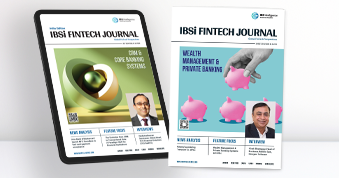
- Most trusted FinTech journal since 1991
- Digital monthly issue
- 60+ pages of research, analysis, interviews, opinions, and rankings
Other Related News
Related Reports
US FinTech Market Landscape & Vendor Analysis 2026
Know More
Global Digital Banking Market Landscape & Vendor Analysis Q2 2026
Know More
Wealth Management & Private Banking Systems Report Q4 2025
Know More
US FinTech Market Landscape & Vendor Analysis 2026
Know More