 Cedar-IBSi FinTech Labs
 Analyst Briefings
 Get in touch
 Back
Back
Your next loan officer might not be a human, and that’s not necessarily a bad thing

By Abhinav Sherwal, Co-founder & Co-CEO, Recur Club
Ask most people why credit underwriting in India is slow, and they’ll tell you it’s a risk problem. Too many informal businesses. Too little reliable data. Too much uncertainty.
After screening more than 15,000 Indian businesses, I’ve come to a different conclusion. The bottleneck isn’t risk assessment. It’s the work that happens before risk assessment can even begin.
A typical underwriting process doesn’t fail because a credit analyst makes a bad judgment call. It fails because the analyst spends most of their time chasing documents, reconciling mismatched figures, and assembling a picture of the business from a dozen disconnected sources. For instance, GST filings that don’t align with banking data, MCA records that need cross-referencing, and bureau reports that raise follow-up questions. By the time a file is ready for a decision, weeks have passed.
Here’s the part most lenders don’t say publicly: a significant share of declined applications weren’t declined because the business was risky. They were abandoned mid-process because the file was never properly completed.
And much of it is self-inflicted. The borrower is asked again for a document they already shared, buried in an email or WhatsApp thread that no one can find. A question gets raised that the submitted data already answers, because nothing connects the figure to the query. These aren’t risk failures or even data failures. They’re manual-coordination failures: delays manufactured by a process that doesn’t remember what it already has.
The loan officer was never the problem. The process that reaches them is.
What AI actually fixes
India has 63 million MSMEs contributing nearly 30% of GDP. Their credit gap isn’t primarily about lender appetite or borrower risk; it’s about operational friction. A business can open an account or make a payment in minutes, yet underwriting remains one of the last financial workflows still built around paperwork and waiting.
The honest case for AI isn’t that machines make better credit decisions than people. It’s that machines are far better at the preparatory work like reading documents, extracting figures, cross-referencing sources, and running validation checks at a speed and consistency no human analyst can match.
Feed in the documents, and a well-designed system can read bank statements, reconcile GST records, pull bureau data, flag anomalies, and generate a structured credit memo in seconds rather than days. The analyst who would have spent that time assembling the file can instead do what they were trained to do: evaluate risk.
That’s the difference between an operation that serves hundreds of businesses a month and one that serves thousands, and between a borrower getting a decision in hours and one that takes months, by which point the opportunity may be gone.
Where the human is irreplaceable
So yes, your next loan officer might not be human and not only for the paperwork.
Given the right context, like every email, call, and WhatsApp thread, plus the full history of comparable cases, AI can interpret most of the nuances we once assumed needed a human. A temporary dip from a delayed enterprise contract; a profitable company that just bought inventory: these aren’t puzzles to a system that reads the entire record and references thousands of similar situations it has already seen. On data-driven judgment, AI doesn’t just flag the signal; it increasingly reads it better and faster than any individual analyst.
What AI still can’t replicate is the human read. How the business owner carried themselves in the room. Their confidence under questioning. A loan officer’s gut on whether this founder will actually do what they say and deploy the capital where they committed. That trust built across the table is the part AI can’t reach and is still a long way from anything a machine can do.
So the role isn’t disappearing. It’s narrowing to what only a human can offer, while AI consistently makes every data and context-based call better and faster.
The governance question CIOs cannot ignore
This is where most AI-in-lending strategies quietly fail. The challenge isn’t fast answers. It’s answers that can be explained, audited, and defended. If a regulator, credit committee, or borrower asks why a decision was made, a confidence score is not an acceptable answer. Every recommendation must be traceable, every flag reviewable. The institution, not the algorithm, bears accountability for every decision.
This is the line that separates a demo from a deployable system. It’s why, when in Recur we built our own underwriting infrastructure – AICA, every one of the 100+ checks that run on a file is individually surfaced and reviewable, not a black-box output but an auditable trail a credit committee can stand behind. Speed without explainability isn’t a feature. In lending, it’s a liability.
But explainability is only half of it. An AI is only as good as the context it sees, and in lending, critical context often lives off-platform. One phone call between an RM and a borrower, a single WhatsApp exchange that never enters the system, and the model is reasoning on an incomplete file. Context coverage is a governance requirement in its own right: you can’t defend a decision the AI made without seeing everything that shaped it.
The loan officer isn’t being replaced. They’re being freed from the document-chasing that never needed a human, and to spend their judgment where it was always meant to go: reading the person across the table. Do that accountably, and you don’t just lend faster. You lend to creditworthy businesses that the old processes were quietly turning away.
Previous Article
September 15, 2026
Private credit has Matured. Operational Excellence is the Next Differentiator
Read MoreIBSi News

Get the IBSi FinTech Journal India Edition
- Insightful Financial Technology News Analysis
- Leadership Interviews from the Indian FinTech Ecosystem
- Expert Perspectives from the Executive Team
- Snapshots of Industry Deals, Events & Insights
- An India FinTech Case Study
- Monthly issues of the iconic global IBSi FinTech Journal
- Attend a webinar hosted by the magazine once during your subscription period
₹200 ₹99*/month
* Discounted Offer for a Limited Period on a 12-month Subscription
IBSi FinTech Journal
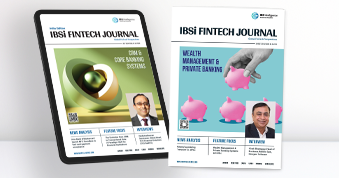
- Most trusted FinTech journal since 1991
- Digital monthly issue
- 60+ pages of research, analysis, interviews, opinions, and rankings
Other Related Blogs
September 15, 2026
Private credit has Matured. Operational Excellence is the Next Differentiator
Read MoreRelated Reports
US FinTech Market Landscape & Vendor Analysis 2026
Know More
Global Digital Banking Market Landscape & Vendor Analysis Q2 2026
Know More
Wealth Management & Private Banking Systems Report Q4 2025
Know More
US FinTech Market Landscape & Vendor Analysis 2026
Know More