 Cedar-IBSi FinTech Labs
 Analyst Briefings
 Get in touch
 Back
Back
Agentic fraud is evolving by the hour, so must our defences

By Jonathan Frost, Director of Global Advisory at BioCatch
The FCA and INTERPOL are warning that agentic AI will transform financial crime. Jonathan Frost, Director of Global Advisory at BioCatch, calls for banks to respond with equally adaptive defences, using AI and behavioural intelligence to distinguish genuine users from autonomous agents in real time.
Most crime against individuals in England and Wales has fallen over the past decade. Fraud is the exception. The latest Crime Survey for England and Wales estimates that there were 4.5 million fraud incidents in the year to March 2026. The number of victims rose 10% to 3.8 million. Since 2017, fraud has increased by 32%.
Industry data points the same way. UK Finance recorded a record 4.06 million confirmed fraud cases last year, with losses rising 4% to £1.28 billion. Two independent measurement systems, one a household survey and one industry-confirmed case data, are showing the same trajectory. And criminals have achieved this growth with largely manual methods.
That constraint is about to disappear. The Financial Conduct Authority’s landmark Mills Review concluded that agentic AI could amplify fraud across financial services. This echoes warnings from INTERPOL’s Global Financial Fraud Threat Assessment that AI-enabled fraud is now 4.5 times more profitable than classic methods. Criminals are adopting autonomous agents, which can act and adapt with far less human involvement than before. This makes fraud dramatically cheaper to run and easier to scale, fundamentally changing the economics of financial crime.
Financial institutions are particularly exposed because they sit at the intersection of identity, trust, and money movement. Agentic AI attacks all three simultaneously, creating identities, manipulating customers and automating account access.
The question now is how financial institutions can adapt, and if they can do so quickly enough to keep pace with an adversary that evolves by the hour.
Redefining the economics of fraud
Financial crime has historically been constrained by human labour. Fraudsters had to spend time manually identifying victims, writing convincing messages, maintaining conversations and testing stolen credentials.
Agentic AI automates much of this work. At account opening, it can create and adapt synthetic identities in real time.
In account takeover, it can augment phishing campaigns, automate credential testing and mimic legitimate activity. In scams, it can generate personalised content and deepfakes, manage simultaneous interactions, and probe controls for weaknesses, all while continuously testing and refining approaches, helping criminals operate faster. It can even scale the recruitment and management of money mules.
This is the industrialisation of fraud. Criminals with access to agentic AI will be able to operate more efficiently, at a greater scale, and at a lower cost than ever before. The direction of travel is already visible. The CSEW shows fraud growth concentrated in volume, with more victims and more incidents rather than larger individual losses. Agentic AI accelerates exactly that model.
This presents a serious challenge for many of the fraud controls that have served banks well.
Deterministic defences will fall short
Many fraud controls remain deterministic, relying on static, rules-based logic. Generally, thresholds are established, and alerts are generated when activity falls outside those anticipated parameters — for example, when a user enters a digital banking session on a new device, from an unusual geolocation, or attempts a high number of transactions in a short period.
While these controls remain effective against recognised fraud typologies, they are not sufficient on their own against systems that can autonomously test, adapt and fine-tune their approaches in the seconds after encountering any sort of resistance.
Financial institutions need controls that are equally adaptive and can spot the difference between human and agent in real time.
Adapting to the threat
Banks can nevertheless identify the signs of automation. AI agents often interact with digital environments differently from genuine users, leaving behind subtle behavioural fingerprints. These include a lack of natural hesitation, unusually consistent interaction styles and precise cursor or touch placement. Other technical artefacts, including fixed or highly specific window dimensions during a session, can also indicate the presence of an agent.
Using behavioural intelligence, banks can continuously assess whether the entity conducting a session behaves like the human user. Instead of relying on individual rules, this gives financial institutions oversight of the full session, including how users type and navigate, as well as subtle hesitations throughout their payment journey.
While agentic AI can learn to bypass established rules, reproducing the complete behavioural profile of a legitimate customer across an entire session is significantly more difficult. Replacing an agent’s behavioural artefacts with those of each user would make attacks more expensive and complex, undercutting the very economic advantage that makes agentic AI so attractive to criminals in the first place.
Regulatory calls for action are an essential step in the right direction, but criminals are already adapting at speed. As agentic systems become more capable, their advantage will compound. Banks must keep pace to have a chance of succeeding. That means using AI to fight AI, deploying adaptive controls that evolve alongside the threat, and adopting behavioural intelligence to identify agents. Financial institutions cannot afford to wait until agentic fraud becomes fully established. The longer they wait, the more expensive it will become to close the gap.
Previous Article
October 06, 2026
Ecosystems, Not Tools: Why Partner Strategy Now Defines Global FinTech Winners
Read MoreIBSi News

Get the IBSi FinTech Journal India Edition
- Insightful Financial Technology News Analysis
- Leadership Interviews from the Indian FinTech Ecosystem
- Expert Perspectives from the Executive Team
- Snapshots of Industry Deals, Events & Insights
- An India FinTech Case Study
- Monthly issues of the iconic global IBSi FinTech Journal
- Attend a webinar hosted by the magazine once during your subscription period
₹200 ₹99*/month
* Discounted Offer for a Limited Period on a 12-month Subscription
IBSi FinTech Journal
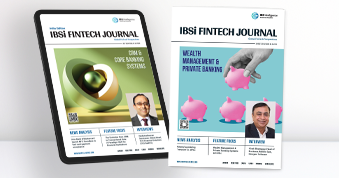
- Most trusted FinTech journal since 1991
- Digital monthly issue
- 60+ pages of research, analysis, interviews, opinions, and rankings
Other Related Blogs
October 06, 2026
Ecosystems, Not Tools: Why Partner Strategy Now Defines Global FinTech Winners
Read MoreSeptember 29, 2026
Your next loan officer might not be a human, and that’s not necessarily a bad thing
Read MoreRelated Reports
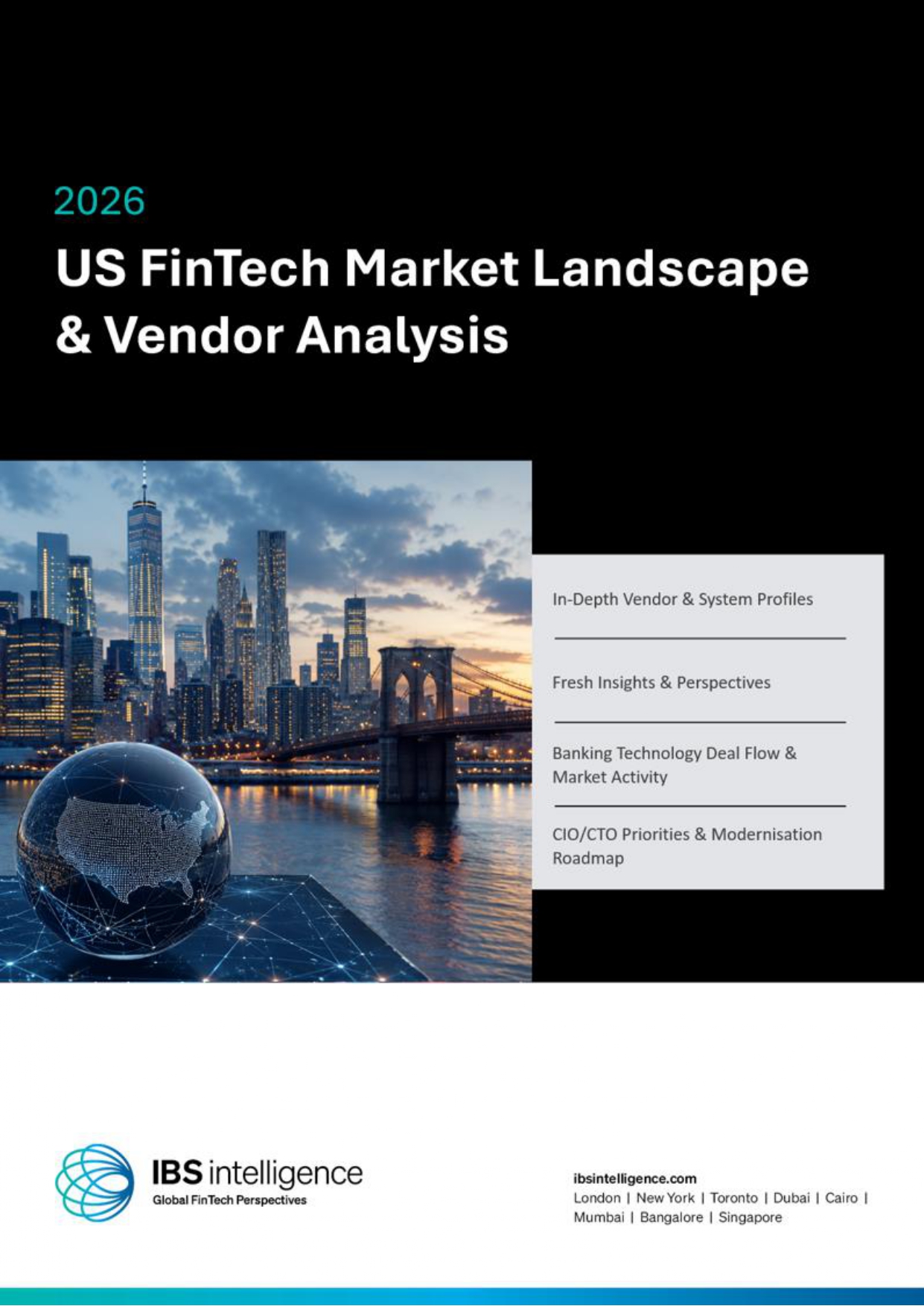
US FinTech Market Landscape & Vendor Analysis 2026
Know More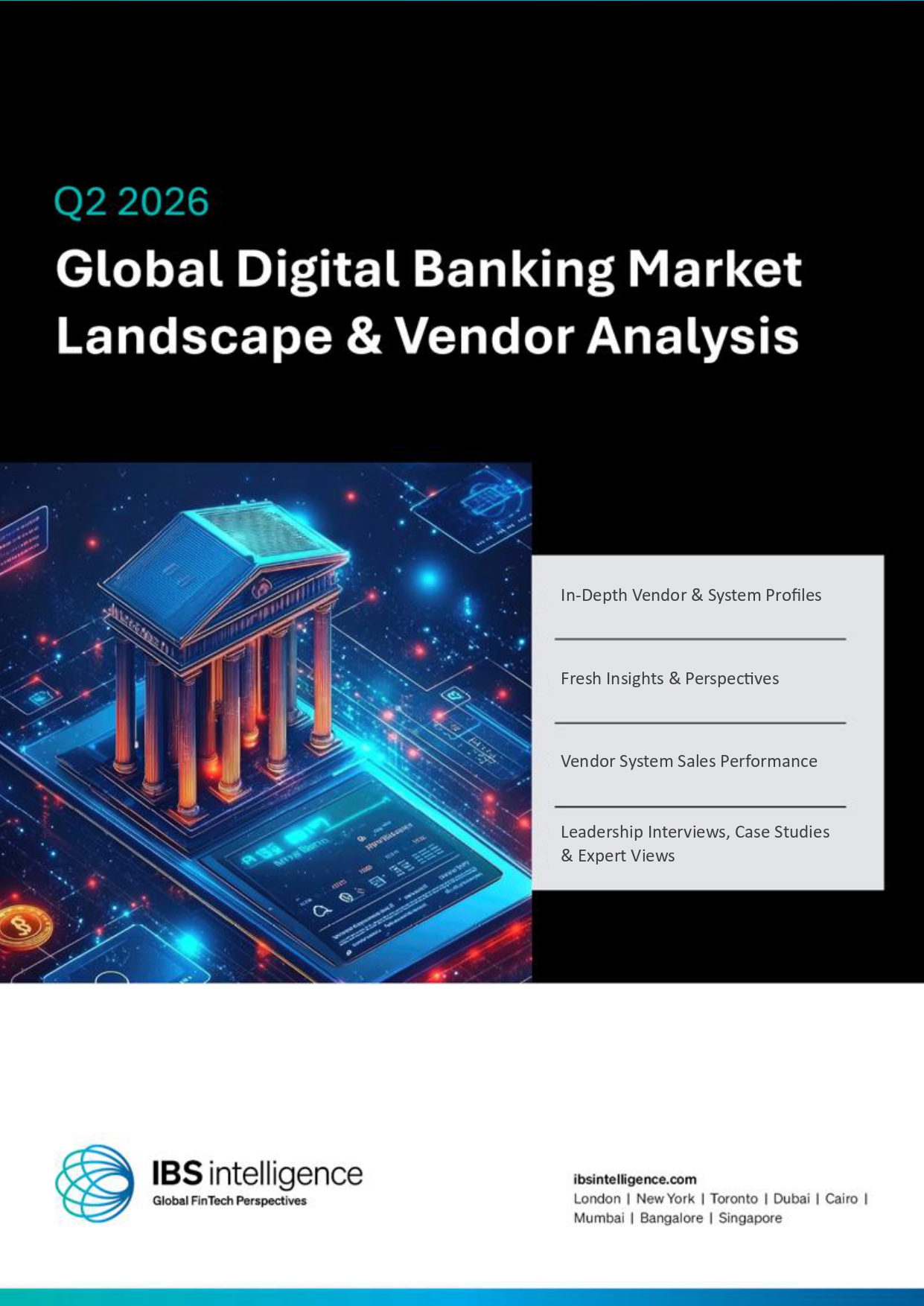
Global Digital Banking Market Landscape & Vendor Analysis Q2 2026
Know More
Wealth Management & Private Banking Systems Report Q4 2025
Know More
US FinTech Market Landscape & Vendor Analysis 2026
Know More