 Cedar-IBSi FinTech Labs
 Analyst Briefings
 Get in touch
 Back
Back
Swiss Banks question fraud defences despite stable trends
By Divya Shah
 Swiss banks remain cautious about their ability to tackle fraud and financial crime, even as fraud activity grows at a slower pace than in many other markets, according to new research commissioned by BioCatch.
The survey, which gathered responses from 100 fraud management, anti-money laundering (AML), and compliance leaders at banks across Switzerland, found that only 55% rate their institution’s fraud controls as effective, significantly below the global average of 76%. Just 11% consider their defences to be very effective, the lowest proportion recorded across the 12 markets surveyed.
The Switzerland study forms part of a wider BioCatch research programme involving 1,200 banking leaders across 12 geographies. All respondents hold manager-level positions or above within fraud or financial crime departments.
Despite concerns over existing controls, Swiss banking leaders report relatively modest growth in fraud activity. Only one-third of respondents say fraud attempts have increased over the past 12 months, while just 1% describe the increase as significant.
Similarly, 42% report higher fraud losses at their institution, placing Switzerland among the markets with the lowest reported growth in fraud incidents and losses.
However, financial losses remain substantial. Nearly two-thirds (64%) of respondents report annual fraud losses exceeding $10 million, surpassing the global average by 13 percentage points and ranking as the highest among all surveyed regions.
“While Swiss banking leaders report relatively stable rates of fraud, nearly two-thirds (64%) report annual fraud losses in excess of $10 million, 13 percentage points above the global average and the highest of any region we surveyed,” said BioCatch Director of Global Fraud Intelligence Thomas Peacock.
He added, “Even comparatively slow or little growth in fraud losses in Switzerland builds on an already elevated baseline.”
The findings suggest that while fraud volumes may be comparatively stable, the financial impact of successful attacks continues to be significant.
Beyond monetary losses, reputational risk has emerged as a key concern for Swiss banks. More than three-quarters (78%) of respondents say the reputational impact of fraud and scams is at least as important as the associated financial risk.
The concern is particularly pronounced among senior executives, with 67% of C-suite leaders identifying reputational damage as their primary concern, while none cited financial losses as their main worry.
The research also highlights specific areas of vulnerability within Swiss banks’ fraud detection frameworks. More than half (51%) of respondents identify malware as one of their institution’s biggest weaknesses, while 48% point to coached user journeys and other social engineering tactics as major detection challenges.
Customer reimbursement practices also stand out. Over half of scam victims are reimbursed by their bank, according to 60% of respondents, which is 16 percentage points higher than the global average. This happens even though there are no mandatory reimbursement requirements for losses resulting from scams in Switzerland.
The survey indicates that banks experiencing higher fraud losses are accelerating investment in fraud prevention technologies. Among institutions reporting annual fraud losses of at least $25 million, 54% say they are actively procuring or implementing new fraud-fighting solutions.
Social engineering remains a leading source of fraud activity. More than half of respondents (51%) rank social media among the top three channels used by fraudsters to target victims in Switzerland, closely followed by phone calls at 49%.
The findings highlight the growing role of customer manipulation tactics in financial crime and the need for banks to strengthen behavioural and digital fraud detection capabilities.
Overall, the research suggests that while Swiss banks are not experiencing the sharp increases in fraud seen elsewhere, concerns around the effectiveness of existing controls, high financial losses, and reputational risk are driving greater focus on fraud prevention and technology investment.
Previous Article



IBSi FinTech Journal
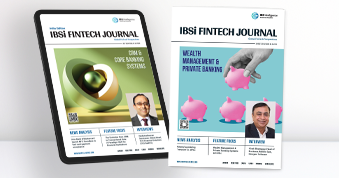
- Most trusted FinTech journal since 1991
- Digital monthly issue
- 60+ pages of research, analysis, interviews, opinions, and rankings
Other Related News
Related Reports
US FinTech Market Landscape & Vendor Analysis 2026
Know More
Global Digital Banking Market Landscape & Vendor Analysis Q2 2026
Know More
Wealth Management & Private Banking Systems Report Q4 2025
Know More
US FinTech Market Landscape & Vendor Analysis 2026
Know More