
 Cedar-IBSi FinTech Labs
 Analyst Briefings
 Get in touch
Building a stablecoin-powered Islamic digital bank, Rafiza Ghazali, MD, Consumer Banking, Fasset
By Puja Sharma
July 28, 2026
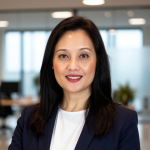
Consumer Banking, Fasset
In October last year, Fasset secured conditional approval from Malaysia to provide banking services. IBSi spoke with Rafiza Ghazali, Managing Director, Consumer Banking of Fasset. The licence allows Fasset to add full-service digital Islamic banking to its existing global user base within a regulated sandbox for Islamic FinTech innovations.
In February, seasoned banker Rafiza Ghazali became Fasset’s Managing Director, Consumer Banking. She is one of Southeast Asia’s few executives who has taken a licensed digital bank from inception to full public launch (KAF Digital Bank).
Ghazali brings over two decades of experience spanning central banking, capital markets, Islamic finance, and digital banking. At Fasset, she is driving a global, stablecoin-led banking strategy across retail, private SME, and trade finance segments, while scaling digital banking operations from Malaysia under the aegis of the Labuan Financial Services Authority.
IBS Intelligence asked Rafiza Ghazali what lessons from her prior experience with KAF Digital Bank are shaping and defining Fasset’s consumer strategy: “Building KAF Digital Bank from the ground up reinforced that successful digital banking starts with clarity of purpose. Customers adopt products that solve something meaningful in their daily financial lives. This requires a disciplined focus on onboarding, trust, and consistency in service delivery.
“At Fasset, we are building services that allow users to move money, save, and invest across borders with the same level of reliability and security they would expect from a traditional bank, combined with a seamless, modern digital experience. This is particularly relevant for our user base, many of whom operate across multiple markets and face fragmentation in existing financial systems.
“The focus is on getting the fundamentals right. Products need to be intuitive, user-friendly, but also predictable in how they behave, and that is how trust is built. Over time, this creates a foundation for broader engagement, rather than relying on short-term acquisition.”
What aims do you have for the digital banking operations in Malaysia under the Labuan regulatory framework?
“Malaysia offers a strong foundation for digital banking, particularly given its depth in Islamic finance and regulatory clarity. For Fasset, the Labuan framework is not just a point of entry, but a place to establish how stablecoin-based global Islamic banking can operate in practice within a regulated setting.
“That is why building a model that brings together core banking services and regulated digital asset infrastructure in a coherent way is crucial. This includes asset-backed savings, zero-interest banking products, and more efficient cross-border payments delivered within a single platform. The recent Labuan conditional approval provides a controlled setting to build and refine this model as it scales.
“With a global user base across multiple markets, Malaysia, through Labuan, will serve as a base to deliver consistent banking services across jurisdictions, particularly for users navigating cross-border financial needs. Ultimately, the goal is to build a model that can be extended into other markets without compromising governance standards.”
Fasset’s app already has an established global community – how will you serve banking solutions to them? Will you be hoping to gain banking licences elsewhere as well?
“Fasset already has an existing user base that engages with digital assets and cross-market opportunities. The next step is to layer banking services and products in a way that deepens engagement, rather than starting from scratch.
“We will be focusing on integrating banking directly into how users already interact with the platform. This includes enabling them to hold value more stably, access asset-backed products, and transact without needing to move between multiple providers. The experience should feel continuous, rather than segmented across different financial tools.
“Licensing will be an important part of that evolution. As we expand into new markets, we expect to pursue additional licences where they support customer needs and long-term growth. That process will be deliberate and aligned with local regulatory frameworks and our governance standards.”
What determines whether a bank succeeds in making the leap from regulatory approval to real customer adoption?
“Regulatory approval provides credibility, but it does not guarantee adoption. The real test begins once the product is live and serves the need for everyday use by the customers.
“In practice, adoption is driven by consistency and how the bank performs under real conditions. Customers will try a new bank once, but they stay only if the experience holds up over time. This is where many digital banks are tested, particularly after the initial launch phase. Sustained growth tends to come from repeated usage and continuous engagement, and FinTech players that scale sustainably do so by focusing on everyday financial needs, personalisation, with steady increases in active users and transaction volumes.
“Banks that continue to refine their product based on real usage tend to scale. Those who rely on initial traction will risk hitting a plateau.”
What does a stablecoin-led banking strategy look like, and how much of a challenge will it be to market this to those unfamiliar with stablecoins? Who is your target audience?
“A stablecoin-led strategy focuses on improving how value moves through faster settlement, greater transparency, and more efficient cross-border transactions. For users, the experience should feel familiar, with the underlying technology working seamlessly in the background rather than adding complexity.
“This approach is already reflected in how our platform operates today, with more than $12 billion in annualised transaction volume and an institutional user base that grew 10-fold in 2025. The priority now is on ensuring that these efficiencies translate into something users can rely on in everyday financial activity.
“Customers are ultimately less concerned with the underlying technology and more concerned with whether it works reliably. That means delivering consistency in performance and predictability in how the product behaves.
“Over time, this positions us to serve a broader group of users, be it individuals and businesses managing cross-border payments, as well as users in emerging markets where financial infrastructures remain fragmented. The focus is not on digital assets themselves, but on delivering faster, more efficient financial services that meet real-world needs.”
How will you deliver real-world utility, inclusion, and scale catered to demographic needs?
“Real-world utility comes from designing financial services around how people actually earn, spend, and move money. This includes enabling access to payments, savings, and asset-backed opportunities that reflect real economic needs.
“At Fasset, we are reducing friction in areas where users face the most constraints, particularly in cross-border transactions and access to broader financial markets. Inclusion, in this context, means making these services accessible without lowering standards around security and governance, yet being cost-effective.
“Scale then follows from consistency. If products work reliably across different markets and user segments, they can be extended without needing to be rebuilt each time.”
Fasset and Ajman Bank signed an MoU in Q4 last year to launch Shariah-compliant stablecoins and tokenised assets – what’s the significance, and how is this venture progressing?
“The significance of the partnership lies in integrating digital asset infrastructure within a regulated Islamic banking environment. Ajman Bank brings institutional credibility and Shariah oversight, while we provide the infrastructure to support tokenised assets and stablecoin-based settlement. This enables access to Shariah-compliant tokenised products, including real-world assets, within a structure that is already familiar to users and institutions.”
What do you hope Fasset will look like in five years’ time?
“In five years, Fasset will operate as a fully integrated digital bank across multiple markets, embedded seamlessly into how users move, store, and deploy value daily.
“The ambition is to build a platform that connects banking, payments, and investment into a single system, particularly for users navigating cross-border financial needs. This includes expanding access to Shariah-aligned, asset-backed financial products while maintaining the reliability expected of a regulated institution.
“By maintaining that consistency as the business expands, Fasset will be well-positioned to become the bank users instinctively turn to for their financial needs.”