 Cedar-IBSi FinTech Labs
 Analyst Briefings
 Get in touch
 Back
The Monday Roundup: what we are watching this week | Oct 19th
By Puja Sharma

The Monday Roundup sets the scene for the week’s biggest news stories, industry deals, and upcoming events. For Prime subscribers only.
Digital payments communications
 SWIVEL, a subsidiary of SWBC specialising in integrated financial technology solutions, launched PayPrompt Pro, a digital payments communications platform designed to help financial institutions improve borrower engagement, accelerate payments, and streamline reconciliation processes.
The solution forms part of SWIVEL’s digital payments communications strategy and enables lenders to deliver personalised payment reminders through channels already used by borrowers. Embedded within existing financial institution platforms, PayPrompt Pro combines SMS payment reminders, secure Reply-to-Pay functionality, deep-link payment experiences, and digital engagement capabilities to create a more seamless payment journey.
The launch comes as financial institutions work to balance digital convenience with growing concerns around payment fraud, phishing attacks, and spoofed communications. SWIVEL said the platform is designed to help lenders reduce payment friction while reinforcing trust and security throughout the borrower experience. PayPrompt Pro includes several features tailored to lending and payment workflows. The platform’s Reply-to-Pay capability allows borrowers to respond directly to SMS reminders with a simple “Y” to initiate payment, reducing dependence on links and simplifying the payment process.
Other capabilities include automated payment reminders that help financial institutions engage borrowers before payments become overdue, deep-link payment journeys that guide users directly to payment actions, and native platform integration that embeds communications into existing banking and lending environments. The solution also offers white-labelled branding, allowing institutions to maintain their own identity throughout the payment experience, and instant payment confirmations to reassure borrowers that transactions have been successfully processed.
 Mumbai-based FinTech Paramotor Digital Technology Ltd has filed an Updated Draft Red Herring Prospectus with the Securities and Exchange Board of India (SEBI) for an initial public offering (IPO) worth $119 million (INR 1,000 crore).
The offering will comprise a fresh issue of $83 million (INR 698 crore) and an offer for sale (OFS) of $36 million (INR 302 crore). Under the OFS component, promoters Sonia Pankaj Asher and Rahul Anand plan to sell shares worth up to $18 million (INR 151 crore) each.
The company may also undertake a pre-IPO placement of up to $16.6 million (INR 139.6 crore), which would proportionately reduce the size of the fresh issue. Proceeds from the fresh issue will be used primarily for customer acquisition and brand promotion worth $42.3 million (INR 355 crore), followed by technology development and cloud infrastructure investments of $11.2 million (INR 94 crore), office infrastructure spending of $4.5 million (INR 38 crore), and general corporate purposes.
Founded in 2016, Paramotor Digital operates across four business segments: prepaid payment instrument (PPI) programme management, digital gifting, rewards and loyalty solutions through its RewardOn platform, and enterprise technology services under DevStack. Its consumer-facing offerings include SpendPro and yayyy.shop. The company reported standalone operating revenue of $3.9 million (INR 33.08 crore) in FY24 and $13.3 million (INR 112.08 crore) in FY25. Revenue subsequently rose to $71.8 million (INR 603.15 crore) on a consolidated basis in FY26. For the quarter ended 30 June 2026, Paramotor Digital recorded consolidated revenue of $30.1 million (INR 252.77 crore) and a profit after tax of $2.8 million (INR 23.81 crore).
Broadening financing options for customers with redit profiles
 Meezan Bank, Pakistan’s Islamic bank, has completed the end-to-end migration of its payments business to BPC’s SmartVista platform, strengthening the scalability, reliability, and security of its payments infrastructure.
The migration covers the bank’s entire payments ecosystem, including 7.5 million active cards, merchant acquiring operations, and the payments processing environment. The platform is designed to support peak transaction volumes exceeding 1,500 transactions per second, providing the capacity needed to support Meezan Bank’s growing digital payments business.
The modernised infrastructure supports the bank’s card portfolio, merchant acquiring services across point-of-sale (POS), eCommerce and QR payments, payment gateway services, fraud management capabilities, and instant payment processing.
Meezan Bank currently processes approximately two million Raast transactions daily and supports an acceptance network of more than 100,000 QR codes across Pakistan. The bank said the new platform provides a stronger foundation for continued growth in cards, merchant acquiring, digital payments, and real-time transactions. The migration establishes a unified payments infrastructure capable of supporting high transaction volumes while enabling the bank to expand secure digital payment services and enhance customer experiences.
 South Korean FinTech platform Finda is poised to become the country’s first FinTech company to acquire a savings bank, marking a significant step in its ambition to build an AI-driven digital banking business. The move follows approval from a Financial Services Commission subcommittee, with final regulatory clearance expected soon.
Earlier this year, Finda agreed to purchase 100% of Daewon Savings Bank for around 12 billion won ($9 million). The acquisition will enable the company to expand beyond its current loan-comparison platform model and directly provide banking products such as loans and deposits.
Once the deal is finalised, Finda plans to restructure the bank’s leadership and transform the lender into an AI-native institution focused on digital services rather than traditional branch operations. The company intends to leverage artificial intelligence and lending data accumulated since 2019 to strengthen its nationwide online lending capabilities. The FinTech firm also aims to broaden financing options for customers with low- and mid-tier credit profiles, supported by its relationship with JB Financial Group, one of its major shareholders.
However, the acquisition comes with challenges. South Korea’s savings bank sector has been grappling with financial pressures stemming from troubled real-estate project financing and higher funding costs. As a result, Finda will need to demonstrate its ability to manage credit risks and maintain stable funding sources. Regulatory requirements on regional lending may also limit its efforts to rapidly scale nationwide digital operations.
Daewon Savings Bank, based in Gyeongju, is a relatively small lender that has struggled for years and has had minimal lending activity, making its revival a key test of Finda’s digital banking ambitions.
What is the Buzz
 The Financial Regulatory Authority (FRA) of Egypt has approved six companies to conduct non-banking financial activities using financial technology as part of its efforts to expand digital financial services and accelerate the sector’s digital transformation.
The approvals were granted through the FRA committee responsible for reviewing applications to use FinTech in non-banking financial activities and are aimed at promoting financial inclusion and broader adoption of digital solutions across the sector.
Among the approved firms, Wilzy Financial Holding received authorisation to undertake securities custody activities using FinTech, while Wilzy Securities Trading was approved to conduct its broking activities and operate authorised mechanisms through digital technologies. The regulator also approved the establishment of two FinTech-focused financing companies: Paymob Financing for Small and Medium Enterprises and MIDBANK Digital Financing for Small and Medium Enterprises (SMEs). The new entities are expected to support access to financing for smaller businesses through technology-driven solutions.
In addition, the FRA approved the registration of Fawry for Banking Technology and Electronic Payments as a FinTech outsourcing service provider. The company’s services will be limited to its subsidiaries and will not be extended to other companies operating in non-banking financial activities. The regulator also authorised Souhoola, the consumer finance subsidiary of Banque Misr, to conduct its activities using FinTech infrastructure provided through V-Lens. Souhoola submitted its application before the FRA introduced Resolution No. 43 of 2026, which suspended new applications for the establishment and licensing of consumer finance companies using FinTech for one year. According to the FRA, the approvals are expected to support the adoption of digital solutions across capital market activities while encouraging the use of technology in consumer finance and financing services for micro, small and medium-sized enterprises.
Previous Article

IBSi FinTech Journal
- Most trusted FinTech journal since 1991
- Digital monthly issue
- 60+ pages of research, analysis, interviews, opinions, and rankings
Other Related News
Related Reports
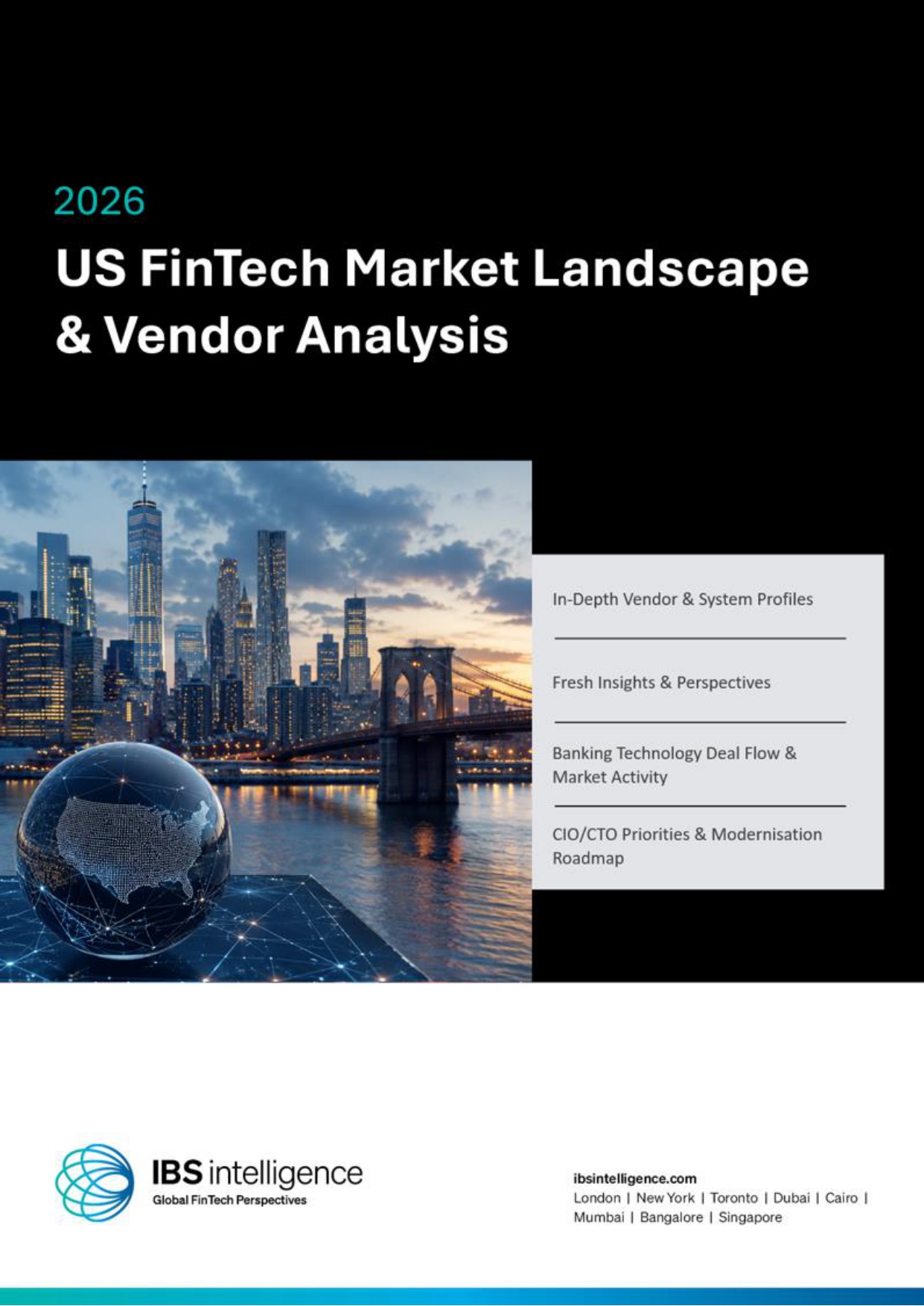
US FinTech Market Landscape & Vendor Analysis 2026
Know More
Global Digital Banking Market Landscape & Vendor Analysis Q2 2026
Know More
Wealth Management & Private Banking Systems Report Q4 2025
Know More
US FinTech Market Landscape & Vendor Analysis 2026
Know More