 Cedar-IBSi FinTech Labs
 Analyst Briefings
 Get in touch
 Back
Back
The Monday Roundup: what we are watching this week | March 23rd
By Puja Sharma
 The Monday Roundup sets the scene for the week’s biggest news stories, industry deals, and upcoming events. For Prime subscribers only.
The evolving digital payments stack
 Mastercard has agreed to acquire BVNK in a deal worth up to $1.8 billion, marking the largest stablecoin acquisition to date and signalling a decisive move to anchor its position in the evolving digital payments stack. The acquisition, which includes a contingent component tied to performance milestones, underscores Mastercard’s intent to ensure stablecoin flows remain within its ecosystem rather than bypass traditional networks.
The strategy is clear: extend its existing payments and compliance infrastructure to seamlessly integrate on-chain rails, including stablecoins, tokenised deposits and fiat. BVNK, which already processes significant transaction volumes across global enterprise clients, brings the regulatory licences, merchant relationships and operational credibility that are difficult to replicate. For Mastercard, this is less about technology acquisition and more about securing distribution and control over how digital value moves.
The move also reflects a broader industry trend. Following Stripe’s earlier acquisition in the space, competition to dominate stablecoin infrastructure is intensifying, with players seeking to vertically integrate across custody, payments and settlement layers. The race is no longer about building new rails, but about owning the control points where financial decisions are made.
 Axis Finance Limited (AFL), an India-based non-banking financial company (NBFCs), announced the rollout of a fully AI-led quality monitoring framework for its collection calls, aimed at elevating customer protection, strengthening compliance, and reinforcing fair, transparent and responsible communication during repayment interactions.
Collection calls are among the most critical customer touchpoints in the lending lifecycle. With this implementation, outbound collection call is now monitored, analysed and assessed to ensure conversations are conducted in an appropriate, respectful and consistent manner, aligned with responsible collection practices and internal governance standards. This transition marks a shift from limited manual call sampling to technology-enabled monitoring at scale, enabling stronger and more consistent supervision across customer interactions.
This AI-enabled framework provides deeper insights into customer conversations, guiding teams on appropriate follow-up actions. It enables standards-driven communication, compliant and conduct-led interactions, and higher-quality customer conversations, while supporting proportionate engagement, reducing repeat outreach and improving clarity across the collections process.
Bypassing traditional card networks
 Huawei has partnered with Luxembourg-based FinTech Yowpay to introduce an open-banking-powered smartwatch POS application that enables merchants to accept payments directly from wearable devices. The solution allows Huawei smartwatches to function as payment terminals, generating dynamic QR codes that customers can scan to complete instant account-to-account transactions via SEPA rails.
By bypassing traditional card networks, the system reduces transaction costs for merchants while ensuring faster settlement directly into their accounts. Customers benefit from a quick, seamless checkout experience without needing cards or dedicated POS hardware. The app, available on Huawei’s AppGallery, supports devices including the Huawei Watch GT and Watch Ultimate series.
Powered by Yowpay’s orchestration layer, the solution leverages SEPA instant payment infrastructure to deliver secure, compliant, and real-time transactions. Its portability makes it particularly relevant for merchants requiring on-the-go payment acceptance, eliminating the need for physical terminals or card readers.
 RNFI Services Limited, through its FinTech platform Relipay, announced the nationwide rollout of its UPI QR-based cash withdrawal service in partnership with Jio Payments Bank Limited, following a successful pilot phase.
The service enables customers to withdraw cash instantly by scanning a UPI QR code at authorised outlets within RNFI’s Business Correspondent (BC) network. Customers can simply scan the QR code, enter the withdrawal amount, and authenticate using their UPI PIN. Once completed, the merchant dispenses the cash, enabling a simple and frictionless assisted transaction experience.
The service will be available across RNFI’s extensive merchant network, ensuring access to cash withdrawal services for customers across urban, semi-urban, and rural markets. In addition to improving customer convenience, the rollout is expected to drive higher transaction volumes and deepen engagement across the Company’s merchant ecosystem.
What is the Buzz
 Mexican retailer and bottler Femsa has laid off workers in its FinTech arm, Spin, as part of a strategic shift to focus more on its Oxxo convenience store chain. The company did not disclose the exact number of job cuts, but reports suggest hundreds of positions were eliminated across Spin and other divisions.
Femsa launched Spin in 2021 as a digital wallet app to facilitate payments and financial transactions, aiming to integrate FinTech services with its extensive retail network. However, the company now says this restructuring is part of a new phase to prioritise its core Oxxo business, which remains heavily cash-driven but also allows customers to pay bills and transfer money. A spokesperson emphasised that the layoffs mainly affected support functions and would not disrupt customer operations. In its recent earnings report, Femsa also revealed it is delaying its application for a banking license until its consumer credit services gain more traction, and it will no longer pursue third-party partnerships for its Premia loyalty program offered through Spin.
This move reflects the challenges FinTech firms face in Mexico’s competitive digital wallet market, where several players have emerged in recent years. While Femsa had sought to leverage its retail dominance to expand into financial services, the decision to scale back Spin underscores a recalibration of priorities toward strengthening its brick-and-mortar operations. The layoffs highlight both the pressures of sustaining FinTech ventures in a crowded market and Femsa’s intent to consolidate resources around its most profitable business lines.
Previous Article

IBSi FinTech Journal
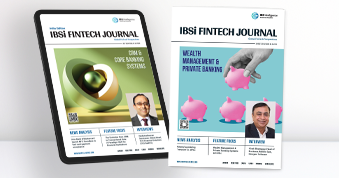
- Most trusted FinTech journal since 1991
- Digital monthly issue
- 60+ pages of research, analysis, interviews, opinions, and rankings
- Global coverage