 Cedar-IBSi FinTech Labs
 Analyst Briefings
 Get in touch
 Back
Back
The Monday Roundup: what we are watching this week | June 22nd
By Puja Sharma

The Monday Roundup sets the scene for the week’s biggest news stories, industry deals, and upcoming events. For Prime subscribers only.
Omnichannel Payment Capabilities
 Deluxe has entered into a definitive agreement to acquire payment technology provider Celero Commerce for approximately $625 million, in a move designed to accelerate the company’s transformation towards higher-growth payments and data businesses.
Celero provides integrated payment processing solutions for small and medium-sized businesses (SMBs) and strategic partners across the United States. The company combines omnichannel payment capabilities with customer support services, helping merchants manage transactions across multiple channels.
The acquisition is expected to strengthen Deluxe’s position in the payments market while expanding its distribution network and merchant services capabilities. Following completion of the transaction, the company said its Payments and Data businesses are projected to account for 57% of pro-forma 2026 revenues, up from 31% in 2020. The combined organisation processed approximately $70 billion in gross transaction volume during 2025, positioning it among the ten largest non-bank merchant acquirers in the United States. Deluxe said the increased scale is expected to improve processing efficiency, enhance operating leverage and create opportunities for long-term margin expansion.
 Botim Money has launched Virtual IBAN-enabled wallets in the UAE, enabling eligible users to receive salary payments, direct deposits and domestic bank transfers directly through the Botim app.
The launch has been introduced under the Central Bank of the UAE’s (CBUAE) Universal Accounts Framework and is aimed at expanding access to regulated financial services for a wider segment of the population. The company said the initiative supports the UAE’s financial inclusion agenda by helping more residents participate in the formal financial system.
Botim Money, which serves more than 8.5 million users in the UAE, stated that eligible customers can now obtain a Virtual IBAN in their own name. In addition to receiving salary credits and domestic transfers, users can access peer-to-peer payments through AANI, international remittances to more than 170 countries, a globally accepted Mastercard card, and regulated investment and credit products.
The company noted that a significant proportion of its user base comprises blue-collar and grey-collar workers, segments that have traditionally faced barriers to accessing conventional banking services. The IBAN-enabled wallet is available with no minimum salary requirement, no minimum balance requirement and no monthly maintenance fee.
Customer-focused payment services
 Newly licensed electronic money institution (EMI) Pace FS has selected SaaScada’s cloud-native core banking platform to support the rollout of customer-focused payment services across Europe.
Headquartered in Latvia, Pace FS has obtained an electronic money institution licence from the Bank of Latvia, enabling it to provide services throughout the European Economic Area (EEA). The company has aimed to modernise payment infrastructure by offering faster and more flexible financial services for merchants and consumers.
Under the agreement, SaaScada has been selected to provide the core banking engine underpinning Pace FS’s operations. The platform will support the issuance of electronic money, domestic and cross-border payments, card issuance and embedded finance capabilities.
The deployment has been designed to provide Pace FS with real-time access to transaction data through SaaScada’s event-driven architecture. The platform has also enabled API-based connectivity with anti-money laundering (AML), sanctions screening and fraud prevention solutions, helping the firm meet regulatory and operational requirements. According to the companies, the implementation has positioned Pace FS to offer instant payments, accelerate settlement processes and launch new products more quickly through an API-first approach. The platform has also been built to support rising transaction volumes as the business expands across European markets while maintaining compliance and security standards.
The partnership has highlighted continued investment in cloud-native banking infrastructure as payment providers seek to meet growing demand for real-time, digital-first financial services across Europe.
 Private equity firm Pollen Street Capital has agreed to acquire Finastra’s Universal Banking unit, Finastra’s global core banking software business, in a move aimed at accelerating innovation and growth in banking technology.
Universal Banking provides core banking technology supporting account and deposit management, payments, lending and treasury operations for more than 150 financial institutions across over 100 countries. Its customer base includes retail and commercial banks, digital banks, Islamic banks and building societies.
At the centre of the business is Essence, Universal Banking’s cloud-first and open banking-enabled platform designed to help financial institutions modernise legacy infrastructure, improve operational efficiency and accelerate digital transformation initiatives.
Following completion of the transaction, UB will operate as an independent business under its existing management team. Pollen Street said its investment will support product development, including Generative AI and advanced data capabilities, while enhancing customer delivery and expanding the platform’s functionality. The transaction aligns with growing demand for core banking modernisation as financial institutions seek to balance innovation with operational continuity. Financial terms were not disclosed. The acquisition remains subject to customary regulatory approvals. Arma Partners advised Finastra and Vista Equity Partners on the transaction, while Nomura acted as financial adviser to Pollen Street Capital. Legal counsel was provided by Kirkland & Ellis and Clifford Chance.
What is the Buzz
The Turtlemint IPO has attracted notable attention from both retail and institutional investors, underscoring the rising confidence in India’s digital insurance sector. Subscription figures across categories have been encouraging, with retail participation standing out as particularly strong. Analysts point out that Turtlemint’s technology-driven model for distributing insurance products, coupled with its expanding reach, makes it well-positioned in a country where insurance penetration is still relatively modest. The pricing of the issue is considered reasonable, especially given the company’s revenue trajectory and its potential to achieve profitability as operations scale further. While competition from established insurers and regulatory complexities remain challenges, Turtlemint’s focus on simplifying insurance access through digital innovation provides a distinct edge.
The grey market premium (GMP) has signalled positive listing expectations, hinting at a debut above the issue price. Experts advise investors to balance the promising long-term growth of InsurTech with possible short-term market fluctuations. Overall, sentiment around the IPO is upbeat, with many viewing it as more than just a capital-raising exercise—it represents a significant step forward for India’s evolving financial services landscape and highlights investor appetite for innovative platforms.


IBSi FinTech Journal
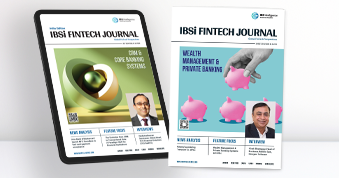
- Most trusted FinTech journal since 1991
- Digital monthly issue
- 60+ pages of research, analysis, interviews, opinions, and rankings