 Cedar-IBSi FinTech Labs
 Analyst Briefings
 Get in touch
 Back
Back
tbi bank completes EUR migration for cross-border payments
By Vriti Gothi

The move positions the Bulgaria-based lender to streamline payments across card, eCommerce, and travel use cases, particularly within the South Eastern Europe (SEE) region, where fragmented currency environments have historically added friction for both consumers and merchants. By consolidating operations into a euro-denominated framework, the bank is effectively reducing complexity in pricing, settlement, and customer experience—key levers for scaling digital banking propositions.
From an infrastructure standpoint, the migration represents a full-stack transformation rather than a superficial currency switch. The bank transitioned over 300,000 debit and credit accounts, including balances, transaction histories, and authorisation records, while recalibrating fraud detection models, pricing structures, and risk thresholds to align with the new currency baseline. This reflects the increasing role of cloud-native, as-a-service platforms in enabling large-scale banking transformations with minimal operational disruption.
Strategically, the transition also reinforces tbi bank’s mobile-first and embedded finance positioning, particularly through its “neon card” offering. The product enables instant conversion of card transactions into buy now, pay later (BNPL) instalments at the point of authorisation—a model that benefits from euro-denominated transparency in repayment schedules and cross-border usability. With transactions, instalments, and repayment timelines now displayed in real time within the app, the bank is aligning with growing consumer expectations for visibility and control over short-term credit.
The partnership with BPC underscores the increasing reliance on integrated payments infrastructure providers to support both issuing and lifecycle management. Beyond card issuing, the collaboration spans tokenisation, digital wallet provisioning via Apple Pay and Google Pay, and omnichannel fraud prevention supported by strong customer authentication (SCA). This integrated stack enables faster rollout of new financial products while maintaining compliance across the card lifecycle.
For merchants, the shift to EUR simplifies reconciliation and settlement processes, particularly for cross-border transactions, while reducing currency-related discrepancies. For the bank, it enables a more standardised operating model, allowing for quicker deployment of euro-based products without extensive redevelopment cycles.
The development comes at a time when FinTechs and challenger banks across Europe are prioritising cross-border scalability and regulatory alignment. Currency harmonisation—particularly into EUR—has become a critical enabler for expanding digital banking services, improving customer experience, and supporting embedded finance models across multiple markets.
As such, tbi bank’s migration is not only an operational milestone but also a strategic step toward building a more unified, scalable payments and lending ecosystem in a region still characterised by currency fragmentation.
IBSi FinTech Journal
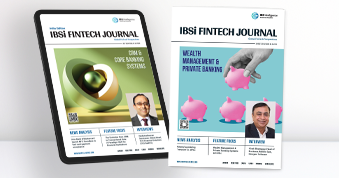
- Most trusted FinTech journal since 1991
- Digital monthly issue
- 60+ pages of research, analysis, interviews, opinions, and rankings
- Global coverage