 Cedar-IBSi FinTech Labs
 Analyst Briefings
 Get in touch
 Back
Back
Southeast Asia emerges as top FinTech hub in Asia
By Parth Prabhudesai
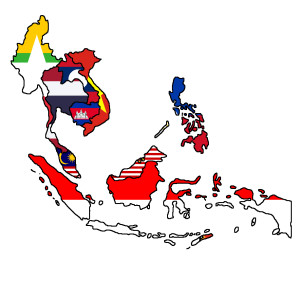
Southeast Asia has emerged as Asia’s most concentrated FinTech market, highlighting both the region’s maturity and the untapped potential across less-developed ecosystems, according to a new study by UnaFinancial.
The report finds that Southeast Asia hosts an average of 14 FinTech companies per one million people, the highest among the four Asian subregions analysed. This density reflects a combination of strong digital infrastructure, supportive regulation, and sustained investor interest across key markets such as Singapore, Indonesia, and Vietnam.
Singapore stands out as a clear outlier, with an exceptional 619 FinTech firms per million people. The city-state continues to reinforce its position as a global FinTech hub, driven by progressive regulation, deep capital markets, and a strong innovation ecosystem. “Singapore’s dominance reflects years of coordinated policy support and its role as a gateway for FinTech expansion across Asia,” the report noted.
In comparison, South Asia recorded a FinTech density of nine firms per million people, led by India at 11.1. Central Asia and East Asia lag further behind, with 5.8 and 4.8 FinTech firms per million people, respectively. The findings highlight a sharply uneven FinTech landscape, with more than a 300-fold gap between the most and least dense markets.
Analysts suggest this disparity presents a dual opportunity for investors. Mature markets such as Singapore offer scale, stability, and advanced innovation, while lower-density regions provide high-growth potential. “The gap in FinTech density signals significant headroom for expansion, particularly in markets where digital adoption and regulatory frameworks are still evolving,” the report said.
Central Asia, in particular, is beginning to show early momentum. Kazakhstan has seen its FinTech ecosystem grow nearly fourfold since 2018, while Uzbekistan has more than quadrupled its FinTech company count over the same period. Both countries are actively investing in national strategies to accelerate FinTech development through 2030.
The report emphasises that improvements in digital infrastructure, access to capital, and regulatory clarity will be critical in unlocking growth in these emerging markets. As FinTech adoption expands across payments, lending, and digital banking, underserved regions are expected to play a larger role in shaping Asia’s next phase of innovation.
“The future of FinTech in Asia will not be defined solely by established hubs, but by how quickly emerging markets can build the foundations for scale,” the report concluded.



IBSi FinTech Journal
- Most trusted FinTech journal since 1991
- Digital monthly issue
- 60+ pages of research, analysis, interviews, opinions, and rankings
Other Related News
Related Reports
US FinTech Market Landscape & Vendor Analysis 2026
Know More
Global Digital Banking Market Landscape & Vendor Analysis Q2 2026
Know More
Wealth Management & Private Banking Systems Report Q4 2025
Know More
US FinTech Market Landscape & Vendor Analysis 2026
Know More