 Cedar-IBSi FinTech Labs
 Analyst Briefings
 Get in touch
 Back
Back
Flex raises $60m to expand AI-driven finance platform
By Vriti Gothi

Flex has secured $60 million in Series B equity financing, led by Portage. The raise brings its total equity capital to $105 million as the company scales its AI-based operating system designed for mid-market business owners.
The funding follows a year of significant expansion across product lines and revenue performance. According to the company, Flex grew revenue fourfold over the past 12 months, tripled its private credit offerings, added personal finance solutions, and introduced a suite of AI-powered capabilities.
Founded to serve owners managing multiple entities and complex financial structures, Flex positions itself as a single platform that consolidates business and personal financial operations—an area the company argues has historically been underserved.
“Our mission is to build the private bank ambitious business owners have always deserved,” said Zaid Rahman, founder and CEO, Flex. “Middle-market businesses employ nearly 40% of Americans, yet lack financial tools built around their needs.”
The round includes participation from Titanium Ventures, Wellington, Crosslink Capital, Companyon Ventures, Spice Expedition, Florida Funders, FirstLook Partners, MS&AD Ventures, Restive and others. Portage partner Jake Bodanis said the firm views the segment as materially underserved. “The company has proven that middle-market business owners are both massively underserved and extremely valuable customers when given the right financial infrastructure,” he said.
A central driver of Flex’s roadmap is its AI-first architecture. Rather than applying AI to legacy workflows, Flex has developed intelligent system “agents” that perform functions similar to a financial team spanning underwriting, payments, treasury optimisation, and back-office operations. These modules support private credit, business finance, personal financial management, payments, and ERP.
The company also highlights its vertically integrated credit strategy, citing tighter risk assessment and product customisation. Its Net-60 credit card remains a key acquisition channel, with customers often expanding into treasury, lending, and financial automation services after onboarding.
Flex plans to use the proceeds to scale its AI infrastructure, broaden credit capabilities, and continue building what it describes as a complete financial stack for business owners—from working capital and operations to long-term wealth planning. Industry observers will be watching whether purpose-built finance platforms for mid-market enterprises translate into a formalized category as competition intensifies between banks, software providers, and corporate finance platforms.

IBSi FinTech Journal
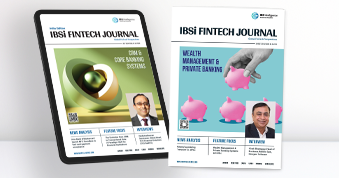
- Most trusted FinTech journal since 1991
- Digital monthly issue
- 60+ pages of research, analysis, interviews, opinions, and rankings
- Global coverage