 Cedar-IBSi FinTech Labs
 Analyst Briefings
 Get in touch
 Back
Back
FinTech enters new era focused on scale, profitability and AI
By Parth Prabhudesai

The global FinTech industry is entering a more mature and disciplined phase, moving beyond the earlier era of rapid expansion and valuation-driven growth toward a stronger focus on scalability, profitability, and regulatory alignment. A recent report by McKinsey & Company, in partnership with QED Investors, highlights how this transition is being shaped by technological innovation, evolving business models, and a deeper integration with the broader financial system.
Artificial intelligence has emerged as the most significant force driving this transformation. Fintech firms are increasingly leveraging AI to accelerate product development cycles, reduce operating costs, and expand access to financial services. What once took years to build can now be developed in a matter of weeks, allowing firms to respond quickly to market demands and serve customer segments that were previously unviable. According to a 2026 study by the Cambridge Centre for Alternative Finance, 79% of financial institutions reported positive outcomes from AI adoption, with fintech firms seeing stronger gains at 86% compared to 68% for traditional institutions. Improvements were most pronounced in technology, data, and product functions, while operational efficiencies were also widely reported across both fintech and incumbent players. As McKinsey notes, “AI is acting as an accelerant across nearly every structural trend in financial services,” while also warning that firms slow to adopt risk falling behind as barriers to entry continue to decline.
At the same time, digital assets are gaining traction, particularly stablecoins and tokenized deposits, which offer the potential for near-instant and low-cost transactions. These innovations are especially relevant for cross-border payments and remittances, where inefficiencies have long persisted. However, real-world usage remains relatively limited. Of the approximately $35 trillion in annual stablecoin transaction volume, only about $390 billion, or 1%, represented genuine end-user payments in 2025. While still a small share, this figure has more than doubled from the previous year, indicating gradual but meaningful progress. McKinsey observes that stablecoins are beginning to demonstrate practical utility beyond trading, though widespread adoption is still in its early stages.
Another notable shift is the move by fintech firms toward becoming fully integrated financial institutions. Rather than operating as specialized service providers, many are seeking banking licenses and expanding their capabilities across the value chain. This approach allows them to improve margins, gain greater control over customer relationships, and reduce reliance on third-party infrastructure. It also reflects a broader convergence between fintechs and traditional banks, as both seek to offer more comprehensive financial solutions.
In parallel, a new category of “horizontal” fintech companies is gaining prominence. These firms provide technology platforms and software solutions to financial institutions, enabling them to modernize legacy systems and improve operational efficiency. Their scalable models and recurring revenue streams have attracted significant investor interest, particularly as demand for digital transformation continues to grow across the banking sector.
Overall, the findings suggest that fintech is no longer defined solely by disruption, but by its ability to scale sustainably and operate within increasingly complex regulatory environments. As the report concludes, the next phase of growth will depend on how effectively firms integrate advanced technologies like AI into robust, compliant, and customer-centric financial ecosystems.

IBSi FinTech Journal
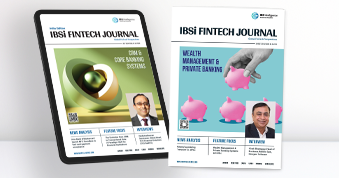
- Most trusted FinTech journal since 1991
- Digital monthly issue
- 60+ pages of research, analysis, interviews, opinions, and rankings
Other Related News
Related Reports
US FinTech Market Landscape & Vendor Analysis 2026
Know More
Global Digital Banking Market Landscape & Vendor Analysis Q2 2026
Know More
Wealth Management & Private Banking Systems Report Q4 2025
Know More
US FinTech Market Landscape & Vendor Analysis 2026
Know More