 Cedar-IBSi FinTech Labs
 Analyst Briefings
 Get in touch
 Back
Back
Time to rethink test data: A smarter approach for FS transformation

by Alex Gilbert, Client Executive, and Adam Pettman, Head of AI, at 2i
Financial services firms are modernising fast. Cloud adoption is scaling, core systems are being rebuilt and AI-powered solutions are regularly featuring in workflows. But one issue continues to constrain progress: test data.
Despite advances across infrastructure and tooling, many development and QA teams still rely on production data – real, live data generated by actual users in operational systems. It’s familiar and historically useful but increasingly problematic. Compliance with frameworks such as GDPR, the UK Data Protection Act and the FCA’s guidance on data innovation places stringent limits on how production data can be accessed, shared and manipulated for testing. These regulatory requirements, combined with operational and technical risks, are making the continued use of live data in non-production environments harder to justify.
Why production data falls short
Live data, while realistic, creates friction. Privacy rules restrict access. Cleansing sensitive fields adds delay. Even once approved, production data often fails to cover edge cases or simulate future behaviours.
Development cycles slow. Teams wait for access or spend time preparing data that doesn’t fully support what they need to test. And in many cases, critical conditions – the scenarios most likely to expose vulnerabilities – are absent.
For example:
- Complex fraud patterns such as multiple high-value transactions from different countries within minutes, all linked to one account.
- Regulatory edge cases where a single transaction triggers anti-money-laundering thresholds in multiple jurisdictions simultaneously.
- Operational stress failures like a partial outage in a payments gateway during peak trading, combined with high retry rates that overwhelm settlement systems.
In a sector driven by precision and resilience, missing these scenarios can mean the difference between containing a risk in testing and facing it in the live environment.

Synthetic data, the smarter alternative
Synthetic data offers a more adaptive approach. It mirrors the statistical structure of real datasets without including any actual customer information, making it safer to use and more flexible in practice.
Unlike mock data, which, as its name suggests, often lacks depth, synthetic datasets reflect relationships between behavioural inputs and system outcomes such as fraud risk tied to transaction patterns or lending thresholds influenced by demographic traits. This makes it possible to simulate scenarios that production data rarely captures.
Adoption of synthetic data is already underway. Financial services teams are applying it to validate fraud systems, train AI models, test biometric authentication and stress-test scoring engines. For CTOs, its value goes further: synthetic datasets can accelerate model validation cycles, surface and address bias earlier in development and support the regulatory explainability needed to demonstrate fairness and compliance to auditors. In each case, teams gain realism without the burden of regulatory risk.
Strategic considerations for FS leaders
Bringing synthetic data into the organisation is less about the specific technology and more about the intent behind it. It’s about giving your people the tools they need to build, test and innovate with confidence – a decision that reshapes how development and testing interact with risk and innovation.
Leaders should focus on three things.
First, ensure that synthetic data aligns with your organisation’s governance approach and regulatory expectations but weigh these considerations against the risks of your current approach, which may fall short of legal or best-practice standards. Second, prioritise use cases where production data has become a barrier, for example, in areas involving privacy-sensitive inputs or emerging behaviours. Third, start incrementally. Controlled pilots help build evidence and confidence, allowing teams to adapt without disruption.
Cross-functional engagement is essential for its success. Real progress happens when technology, compliance, legal and business teams are aligned using it and not just experimenting with it in isolation.
Progress without the wait
A frequent blocker to transformation is the idea that data must be perfect before anything meaningful can begin. In many organisations, this ‘wait’ is tied to the time-consuming process of provisioning live data – navigating approval workflows, meeting compliance requirements and cleansing sensitive information which often leads to stalled initiatives and missed opportunities.
Synthetic data provides an alternative. It enables teams to move forward even when data quality is uneven or systems are still being modernised. Instead of waiting, they can test, learn and improve iteratively while keeping customer data protected and projects on track. Progress becomes a process, not a destination.
Shifting the role of test data
Data strategy extends well beyond development. It shapes how quickly and safely organisations can adapt. Synthetic data can act as the oil in the transformation engine, removing the risks and delays tied to live data and enabling innovation to happen continuously. It supports compliance with growing regulatory expectations from bodies such as the UK Financial Conduct Authority and gives teams the flexibility to evolve systems in step with market demands. For CTOs, it could be the difference between leading market change and being forced to follow it.
IBSi News

March 24, 2026
2i
Worldpay, now Global Payments, joins EPI to roll out Wero instant payments across Europe
Read MoreGet the IBSi FinTech Journal India Edition
- Insightful Financial Technology News Analysis
- Leadership Interviews from the Indian FinTech Ecosystem
- Expert Perspectives from the Executive Team
- Snapshots of Industry Deals, Events & Insights
- An India FinTech Case Study
- Monthly issues of the iconic global IBSi FinTech Journal
- Attend a webinar hosted by the magazine once during your subscription period
₹200 ₹99*/month
* Discounted Offer for a Limited Period on a 12-month Subscription
IBSi FinTech Journal
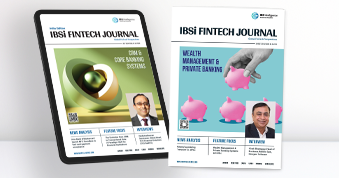
- Most trusted FinTech journal since 1991
- Digital monthly issue
- 60+ pages of research, analysis, interviews, opinions, and rankings
- Global coverage
Other Related Blogs
March 19, 2026