 Cedar-IBSi FinTech Labs
 Analyst Briefings
 Get in touch
 Back
Back
SME Banking in 2026: the big battleground for banks and why the window is closing the urgency behind the SME opportunity

By Rajashekara V Maiya, Head of Business Consulting and Alliances, Infosys Finacle
Small and medium-sized enterprises have always been the backbone of the global economy, representing nearly 90% of all businesses worldwide and more than half of private-sector employment. But in 2026, their importance takes on a new urgency not because SMEs suddenly matter more, but because the window for banks to capture this segment is closing fast. Much of the value that once flowed predictably into banking institutions is being diverted to digital-first challengers, platforms, and embedded finance ecosystems.
For years, SME banking was seen as high‑potential but operationally burdensome a segment requiring heavy documentation, branch-led servicing, and high-touch engagement with modest margins. In reality, SMEs have been structurally underserved by design. Legacy operating models were not built for businesses that must now operate digitally, globally, and continuously. SMEs today expect real-time settlements, instantaneous credit decisions, seamless cross‑border capabilities, and contextual financial services that appear inside the platforms they already use. These new expectations do not represent incremental enhancements; they represent an entirely new baseline.
Platforms Reshaping Competitive Dynamics
This shift is already altering the competitive landscape. FinTechs, BigTechs, and platform-native lenders are capturing SME relationships not simply by offering banking products, but by embedding financial actions directly into day‑to‑day workflows. Their advantage lies in their native access to data transactional, behavioral, and operational combined with their ability to underwrite and service SMEs at the moment of commercial action.
Banks are not losing SMEs overnight; they are losing the opportunity to remain the primary relationship holder. By 2026, SME banking has transformed from a product-led business into a platform-enabled operating model that banks must participate in, or risk being relegated to balance‑sheet providers behind someone else’s interface.
From Disjointed Products to Workflow Ownership
SMEs never experience banking as isolated product. Their financial lives flow through integrated workflows: receiving payments, paying suppliers, managing cash cycles, forecasting liquidity, navigating FX exposure, paying employees, and handling tax obligations. These workflows now operate in real time across accounting software, invoicing platforms, e-commerce systems, and marketplace rails.
For banks, this shift forces a fundamental rethinking of what it means to “serve” SMEs. The new battleground is workflow ownership, not product distribution. If a platform controls the workflow, say, Shopify controlling payments and lending or an ERP system controlling payables and receivables it naturally controls the financial relationship. Banks that remain outside these workflows will lose relevance quietly but permanently.
Reinventing the SME Business Model
In 2026, differentiation in SME banking will come from how well digital models mature, specialise, and scale not from whether they exist. Digital-only SME propositions are evolving beyond generic solutions into verticalised ecosystems serving exporters, micro‑retailers, gig‑workers, and platform-native sellers.
Embedded finance is undergoing its own evolution. The Adyen–BCG Embedded Finance Report estimated the embedded finance opportunity in SMBs at $185 billion, but noted that only 20% is currently captured. This underlines the scale of unfinished opportunity and the risk of inaction.
Marketplace banking is also shifting from aggregators of third‑party services to curated ecosystems aligned to SME growth journeys. Banks that design or partner into these ecosystems can reclaim their role as primary advisors. Those that resist ecosystem integration risk becoming invisible utilities, providing capital while someone else owns distribution and loyalty.
Building the Right Organisational Capabilities
The next frontier is internal capability building. For decades, banks incorrectly treated SMEs as a scaled‑down version of corporates or a slightly more complex variant of retail. In truth, SMEs are neither and their unique economics demand dedicated models.
By 2026, AI sits at the center of effective SME banking, but only if banks have robust data foundations. Transaction data, sales flows from marketplaces, payment behavior, and platform signals enable continuous underwriting, real‑time forecasting, contextual insights, and automated covenant monitoring. This finally moves banks away from episodic, document-heavy decision-making toward intelligence-led, ongoing engagement.
But AI alone cannot fix capability gaps. Banks must restructure SME teams around industries and ecosystems, deploy cross-functional squads across product, risk, analytics, and partnerships, and empower relationship managers with digital tools and sector-specific intelligence. The bank of 2026 must operate with the speed of a FinTech, the trust of a bank, and the integration mindset of a platform player.
Delivering Value Through Configurability and Omnichannel Presence
If the last decade was about digitisation, the next is about configurability. SMEs want financial services that flex around their business cycles from matched-tenure lending and dynamic payment options to modular treasury features and plug-and-play FX solutions.
This demands a shift toward modular product architecture, where SMEs can tailor services rather than inherit rigid, one-size-fits-all structures. It also requires a true omnichannel model: digital for speed and autonomy, relationship-led for complexity, and community-led physical spaces for trust and advisory depth.
The ecosystem dimension is equally critical. Platforms such as Shopify, Square, Toast, and SumUp now process nearly 30% of global consumer purchases, with even higher shares among small retailers and restaurants, reshaping payment, financing, and settlement flows. Banks must design for partnership rather than proprietary control. Future SME relationships will be built inside these ecosystems, not outside them.
2026 and Beyond: SME Banking Becomes a Platform Play
The story of SME banking in 2026 is not about incremental improvements. It is about a fundamental shift in where value is created, captured, and monetised. SMEs will continue to be the growth engine of the global economy, but the financial institutions that serve them will look very different from those of the past.
Banks that succeed will integrate deeply into SME workflows, power ecosystems with modular financial capabilities, operationalise AI responsibly, and redefine the meaning of relationship banking. They will become strategic partners in SME growth, not just providers of accounts, payments, and loans.
Those that hesitate will discover that SME value once readily available and bank-dominated has been redistributed across platforms, FinTechs, and embedded finance players, quietly but irreversibly.
IBSi News

Get the IBSi FinTech Journal India Edition
- Insightful Financial Technology News Analysis
- Leadership Interviews from the Indian FinTech Ecosystem
- Expert Perspectives from the Executive Team
- Snapshots of Industry Deals, Events & Insights
- An India FinTech Case Study
- Monthly issues of the iconic global IBSi FinTech Journal
- Attend a webinar hosted by the magazine once during your subscription period
₹200 ₹99*/month
* Discounted Offer for a Limited Period on a 12-month Subscription
IBSi FinTech Journal
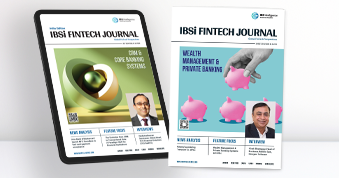
- Most trusted FinTech journal since 1991
- Digital monthly issue
- 60+ pages of research, analysis, interviews, opinions, and rankings