
 Cedar-IBSi FinTech Labs
 Analyst Briefings
 Get in touch
Navigating Relationships Amid West Asia’s Shifting Geopolitical Landscape | A Middle East FinTech Guide
Uncertain Headlines, Steady Foundations: Policy Discipline Anchors Regional Developments
West Asia currently sits at the center of heightened geopolitical attention, with tensions across the Middle East and disruptions to regional trade routes shaping global market sentiment. In response, governments across the Middle East have moved swiftly to reinforce stability through coordinated military preparedness, fiscal support measures, regulatory oversight, and disciplined monetary management. Sovereign balance sheets remain robust, oil revenues continue to provide fiscal buffers, and central banks across the region have maintained a steady hand ensuring that financial systems remain liquid, stable, and well-capitalized.
The region’s financial system remains well supported. Central banks across the Middle East have consistently demonstrated their ability to preserve financial stability through disciplined policy coordination, strong regulatory oversight, and liquidity frameworks. Banking systems across the region maintain capital adequacy ratios above Basel III requirements, reflecting a well-capitalized sector capable of absorbing external shocks.
Even with these stabilizing measures in place, the broader geopolitical backdrop has introduced a layer of caution into markets and boardrooms alike. The lack of clarity around how long the current phase of military exchanges and security responses could persist has made forward planning more complex, prompting businesses and financial institutions to operate with shorter planning horizons. At the same time, the continuous stream of conflict-related headlines has begun to influence the public confidence across the region, introducing a degree of prudence in spending, investment, and broader market behaviour. While these shifts are natural during periods of uncertainty, the underlying economic and policy foundations across the Middle East continue to anchor confidence in the region’s financial system.
Banks Shift into Vigilance Mode: Operational Resilience Moves to the Forefront
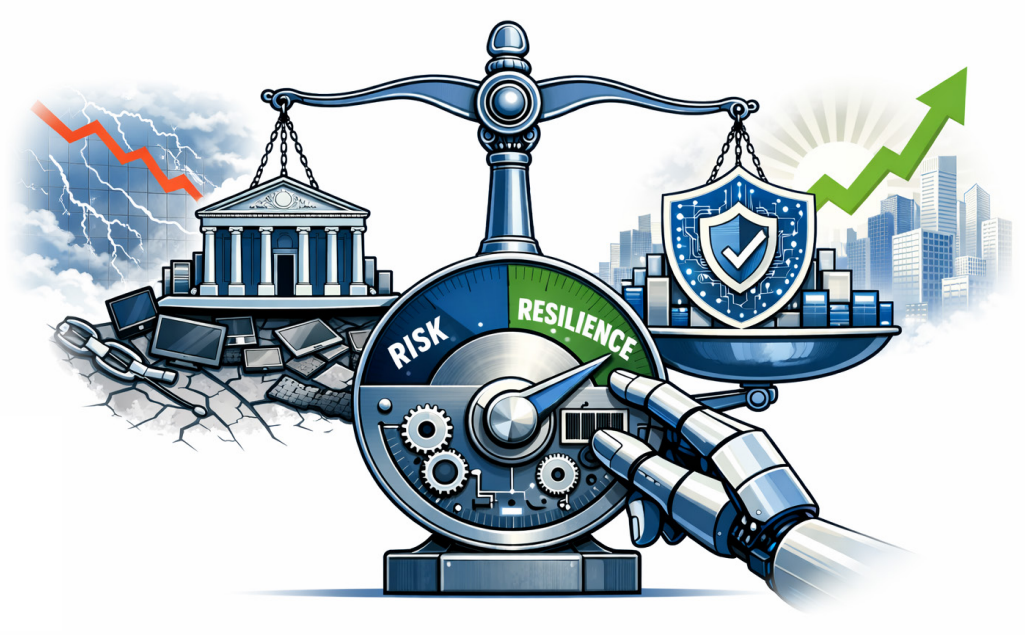
With the current tensions, the banking sector has entered what many executives describe as a more “risk-aware” operating phase. Banks are not retreating from growth or digital transformation, but they are becoming more deliberate in how they deploy capital and technology. Executives are now evaluating transformation programs through a resilienceoriented lens, placing greater emphasis on operational continuity, infrastructure stability, and long-term scalability. Asset–Liability Committees are increasing the frequency of liquidity monitoring, deposit movements are being tracked more closely, and sector exposures, particularly in trade-linked SMEs, logistics, and hospitality are receiving greater scrutiny.
Banks across the region are becoming increasingly conscious of infrastructure concentration risks, particularly around hyperscalers, cloud providers, and other mission-critical digital platforms. Recent regional outages have reinforced the importance of redundancy, disaster recovery capabilities, and multi-cloud architectures. As a result, technology architecture is no longer being evaluated solely on performance and scalability; banks are placing equal emphasis on resilience and the ability to maintain service continuity during periods of disruption.
For FinTech firms operating in the region, this shift has influenced project timelines and engagement dynamics. Procurement cycles are lengthening, governance checkpoints are increasing, and banks are asking deeper questions around vendor stability, integration capability, and regulatory readiness. While some innovation-led pilots have slowed as institutions prioritize resilience-focused investments, the overall demand for technology remains intact. Governments continue to provide clear policy direction, regulators remain supportive of innovation, and banks themselves are adapting quickly, signalling that the sector is not slowing down but maturing toward a more stable and disciplined phase of transformation.
Strategic Guide for FinTechs: Navigating the Region’s Banking Momentum
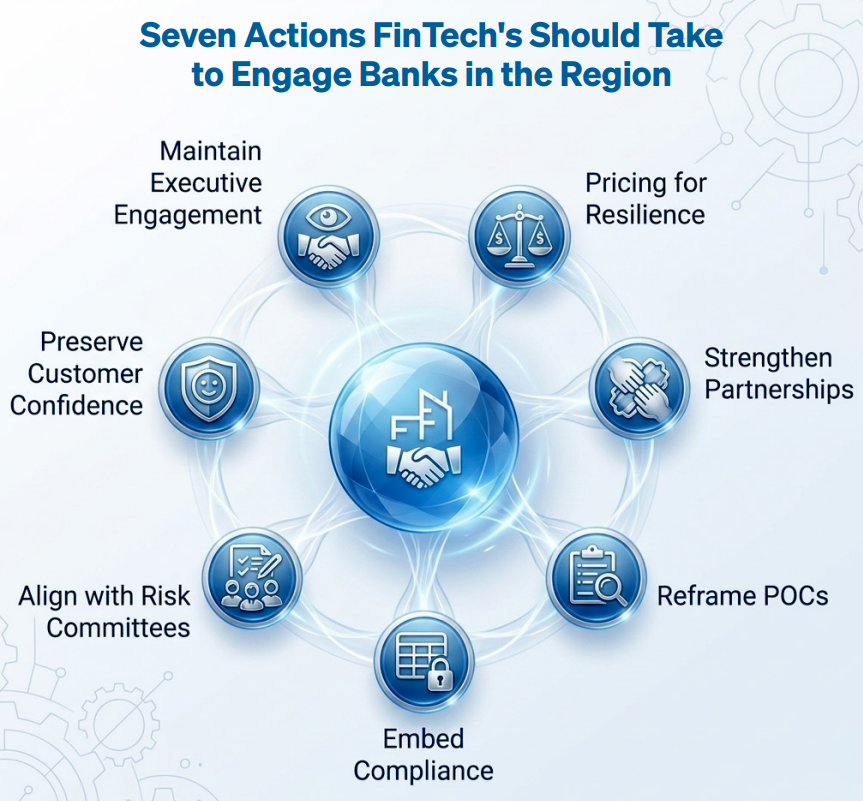
- Price for Resilience, Not Just Growth: Banks are prioritizing liquidity resilience and capital preservation. FinTech pricing models should emphasize operational efficiency, cost reduction, and measurable ROI. Position solutions around improving balance sheet efficiency rather than innovation alone.
- Strengthen Partnerships with Integrators for Business Continuity: Regional disruptions have elevated the importance of uninterrupted operations. Large transformation programs often led by SIs and consulting firms. Aligning with key stakeholders and implementation partners increases credibility, improves access to bank-led RFPs and ensures service continuity.
- Reframe POCs as Risk-Reduction Exercises: Banks now view Proof-of-Concept engagements primarily as risk mitigation tools. AI-driven risk scoring, early warning systems, and enhanced credit monitoring tools are becoming the need of the hour. Structure POCs to demonstrate operational reliability, security controls, compliance readiness and integration capability.
- Embed Compliance, Cybersecurity and Regulatory Readiness Early: Geopolitical tensions increase regulatory scrutiny around sanctions, AML controls, and cybersecurity threats. FinTech vendors must demonstrate strong capabilities in compliance automation, transaction monitoring, and secure digital infrastructure.
- Align with Bank Risk Committees, Not Only Innovation Teams: Banks are increasingly conducting scenario planning around geopolitical, economic, and operational risks. Many deals stall because risk or compliance teams are engaged too late. FinTech’s should involve risk, compliance, and architecture teams early in the engagement process.
- Help Banks Preserve Customer Confidence: During uncertain periods, customer trust becomes critical. FinTech solutions that improve digital reliability, communication channels, fraud prevention, and customer service infrastructure help banks maintain confidence among retail and corporate clients.
- Maintain Executive Engagement with Bank Leadership: In periods of uncertainty, strategic decisions move to senior leadership. Maintaining relationships with CIOs, CTOs, and business heads helps sustain deal momentum.
The Middle East banking market remains one of the most active technology investment regions globally. However, in periods of macroeconomic and geopolitical uncertainty, banks become more disciplined buyers rather than slower adopters. Banks haven’t locked the door — They’re just choosing who gets the key
Banks are increasingly favouring vendors that demonstrate strong regional delivery capability and local market expertise. Establishing an operational presence or forming strategic partnerships within Middle East can significantly strengthen credibility and deepen engagement with banking clients.
Ecosystems like, Cedar–IBSi FinTech Labs (CIFL) can play an important role by connecting banks with resilient technology providers, while also providing access to subject matter experts and industry leaders. Such collaboration enables FinTech vendors to better address emerging operational and technological challenges, while strengthening their competitive positioning in the Middle East region.