 Cedar-IBSi FinTech Labs
 Analyst Briefings
 Get in touch
 Back
Back
FinregE targets FCA crypto ‘Execution Gap’ with new framework
By Puja Sharma
 FinregE, the End-to-End Regulatory Operating System (FinregE ROS), has rolled out a strategic framework urging digital asset firms to move beyond regulatory awareness and prepare operationally for the UK’s 2026 FCA Cryptoasset Regime.
In a newly released blueprint, “Analysing the FCA Cryptoasset Regime 2026: The Way Forward,“ FinregE argued that the industry is currently operating under a dangerous illusion of preparedness by confusing regulatory awareness with regulatory readiness.
The framework, authored by Rohini Gupta, CEO of FinregE, asserts that while the 2027 implementation deadline may appear distant, the structural and technical transformations required are so profound that firms starting now are already in a race against time. The report warns that simply reading policy statements is insufficient, as the new regime demands a total operational overhaul, particularly concerning the shift toward the FCA’s Consumer Duty and a new, crypto-specific standard for operational resilience.
“Under this new regime, the FCA is moving from testing products to testing entire customer journeys, requiring firms to prove that clients actually comprehend volatility and custody risks,” Gupta noted. “Simultaneously, operational resilience has evolved into a technical control challenge.”
FinregE’s framework mandates that firms move beyond paper compliance to simulate “severe but plausible” scenarios, such as validator slashing, smart contract exploits and Oracle manipulation, to demonstrate that their technical architecture can withstand systemic market stress.
This urgency extends to global enterprises for whom UK market access is no longer a mere licensing hurdle but a critical structural decision. With the FCA’s preference for UK-based legal entities, international firms face a complex choice regarding governance, branch models and supervisory access, which are decisions that must be made now to avoid being locked out of one of the world’s most significant financial hubs.
To navigate these complexities, FinregE’s strategic framework provides a rigorous five-step path to readiness. The process begins with a granular mapping of the regulatory perimeter to eliminate “blind spots” in staking and custody operations, followed by the creation of a systematic obligation inventory to replace manual tracking. Firms are then guided to map these obligations directly to internal governance and human owners, execute a deep-dive operational gap analysis and, finally, develop a roadmap organised by regulatory dependency rather than a simple calendar.
The complexity of the 2026 regime creates a high risk of “analysis paralysis,” where firms spend more time interpreting documents than implementing controls. This operational friction is the specific challenge FinregE ROS was engineered to solve.
“The sheer volume of the FCA’s policy statements can create a paralysis of analysis for even the most sophisticated firms,” Gupta added. “FinregE ROS was designed to break that cycle. We don’t just notify you that a rule has changed; we provide the infrastructure to convert that regulatory noise into actionable intelligence. By allowing firms to assign clear ownership, link obligations directly to controls, and build an auditable record of their compliance journey, we transform a daunting regulatory burden into a strategic operational advantage.”



IBSi FinTech Journal
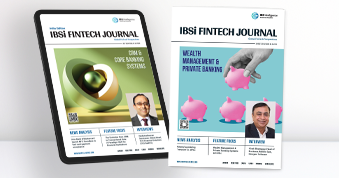
- Most trusted FinTech journal since 1991
- Digital monthly issue
- 60+ pages of research, analysis, interviews, opinions, and rankings
Other Related News
Related Reports
US FinTech Market Landscape & Vendor Analysis 2026
Know More
Global Digital Banking Market Landscape & Vendor Analysis Q2 2026
Know More
Wealth Management & Private Banking Systems Report Q4 2025
Know More
US FinTech Market Landscape & Vendor Analysis 2026
Know More