
 Cedar-IBSi FinTech Labs
 Analyst Briefings
 Get in touch
Transformation is on the way, Karthik Sethuraman, Chief Delivery and Risk Officer, audax Financial Technology
By Robin Amlot
July 28, 2026
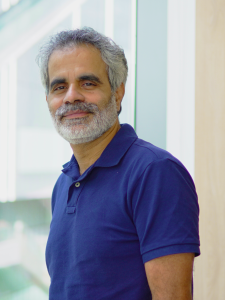
Transformation is the unavoidable buzz word in banking now around the world. It is more than just a trend and more than just the ‘flavour of the month’. Doing nothing is not an option. If your bank is not evolving, then it faces an existential threat. Ready or not, change is coming. IBS Intelligence spoke with Karthik Sethuraman, Chief Delivery and Risk Officer at Singapore-based plug-and-play digital banking platform audax Financial Technology.
“Philosophically speaking, you know, change is happening, whether we acknowledge it or not. And in certain industries, change happens at a much faster pace than in others.
“The financial services sector, in large part banking with insurance also following on, is going through a huge transformative phase. Certain elements were given more priority than others. In payments, for example, a lot of new players came in to transform and disrupt the whole sector.
“Incumbent banks are now catching up on all that to ensure that they stay competitive in that space, it’s not a choice anymore.”
93% of APAC banking leaders say choosing the right platform is critical – presumably the other 7% are looking to change careers?
“I think if you talk to every finance institution, they have plans, they have ideas, and they are acknowledging or recognising the fact that they have to definitely make changes. They cannot stay the same. There are a few institutions used to the pen and paper way of doing things, just the old school methodology. Even they, where they have multiple layers of approvals, are acknowledging that if they don’t digitise, if they don’t change themselves, they’re going to be played out of the market completely.”
Is there a gap between that recognition and actually taking action?
“People typically look at transformation in somewhat of a one-dimensional manner. They believe transformation needs to pull out everything, unplug everything, completely redo the plumbing, you know, or change the whole façade. That’s how transformation has been looked at in the past, in the last 10-15 years in large banks – invariably multi-year, multi-million-dollar projects with a huge scope of work. And then as they go through the journey, they realise that there are lots of unknowns or unplanned things that start derailing the project. And by the time they complete the program, they would have invariably overspent both time and money, and then probably got less than what they actually bargained for at the beginning of the journey.
“There are scars! People who are in this industry have seen enough large and small and medium organisations declare a huge transformation journey, go through it, and then find that they’ve overspent and not got the value that they sought. Transformation needs to be tackled, not in an all or nothing way but with a two-phase strategy. And this is where firms like audax come in. We will enable financial institutions from a customer facing experience standpoint, help them launch new business models without having to go and completely transform their core. So, transformation in small increments, rather than trying to commit to multiple millions of dollars where the results of the strategy will not be known for another two or three years.”
How certain can anybody be that choices made now will still be relevant in the future?
“There is no guarantee in life! But there is a way to look at this. In the technology space, things are evolving at a much more rapid pace than say 10 years back or 15 years back. Then there were a handful of technology players offering core banking solutions, some channels and so on and so forth. Now, there are options aplenty. It is important to look at adaptability and how a platform can respond to anticipated changes in the market.
“Choosing the right banking platform is key to the success of the transformation journey. The important thing is to keep in mind the future relevance of the platform, rather than just being worried about current architecture, the current state, because what we want is a platform that does not just deliver what you are looking for today, but how it will be able to adapt itself to new products and new ways of delivering these capabilities to our customers.”
What does the future hold for audax?
“audax enables banks to launch new digital channels, products, and embedded use cases very, very quickly, and we’ve got very good track record of delivering these capabilities in just six to nine months’ time, without having to touch the core, without having them do a complete replumbing in terms of their core banking platform. Typically the core banking platforms are connected to multifarious places within the organisation, and the integration or a replacement of that, replacing all the integrating points becomes a huge challenge, and that is where audax comes into play.
“The bank doesn’t have to freeze innovation while waiting for a multi-year core replacement, and this also avoids lock-in of the architecture. In simple terms, audax actually helps digital channels from core processing through APIs and modular services and makes this whole modernisation journey into a repeatable process.”
Against that background what’s the significance of your partnership with 10x Banking?
“10x provides the modern core layer underneath and audax can complement that by offering the top layer in terms of the channels and the digital products, which can be embedded into any financial institution. So, this partnership actually brings two complementary offerings together, and as a package, this can help run the two-prong strategy that I was referencing, for any financial institution to take both and then be able to achieve their transformation objectives.”
10x Banking, the cloud-native core banking platform, announced in December 2025 that it had entered a partnership with audax with the aim of transforming how banks in Asia Pacific, Europe and the Middle East scale new digital offerings and modernise their core banking services.
Together, the companies hope to enable banks to launch new digital services rapidly compared to existing legacy core systems, reaching new customer segments while modernising core infrastructure incrementally, reducing the maze of legacy integrations and overall technical debt, while opening the door to new business models such as Banking-as-a-Service, digital wallets, and super apps. Built-in compliance-as-code ensures institutions can stay ahead of regulatory requirements across diverse markets.