 Cedar-IBSi FinTech Labs
 Analyst Briefings
 Get in touch
 Back
Back
From solving cart abandonment to driving merchant growth: Why embedded payments win at checkout

By Michelle Mellish, Head of Tech Partnerships UK & Ireland, Elavon
For every 10 shoppers who add something to their basket, fewer than three complete the purchase. Cart abandonment has been a consistent reality of ecommerce for years, and it currently shows no sign of abating in 2026. However, most merchants are looking for the answer in the wrong place. Embedded payments offer a solution that can eliminate the friction that causes drop-off at the critical moment of conversion.
Dynamic Yield tracked a cart abandonment rate of 77% across 200 million monthly users throughout 2025. The rate on mobile is higher still, sitting above 80% compared to around 66% on desktop. Given that mobile now accounts for most eCommerce traffic in the UK, it’s clear that flaws in current checkout flows are having a genuine impact on revenue.
The reasons shoppers leave is well-documented and, for the most part, avoidable. Unexpected costs appearing late in the process, being forced to create an account before purchasing, and payment options that don’t reflect how the customer wants to pay sit chiefly amongst customer turn-offs. These are common design and infrastructure decisions that merchants either haven’t been able to prioritise or haven’t had the right partners to fix.
The mobile gap is getting harder to ignore
Mobile checkout compounds all of it. Fiddly forms, page redirects, and manual card entry on a small screen create friction that desktop users largely don’t encounter. One-tap payment options (Apple Pay, Google Pay, stored credentials) noticeably close the gap, but only if the underlying payment infrastructure supports them reliably across the platforms merchants use.
That brings us to the part of this conversation that doesn’t get enough attention. Payments have become genuinely complex to manage well. PCI-DSS and PSD2 compliance, fraud detection, dynamic currency conversion, and wallet acceptance across markets aren’t problems that sit naturally with a merchant’s internal team, or with a vertical platform whose core product is something other than payments. When payment capability is bolted on rather than properly integrated, the gaps tend to appear at the worst possible moment. Which is the crucial final step of a transaction.
Why payments can’t be an afterthought
Embedded payments address this directly. When payment infrastructure is built into the platforms merchants and their customers already use, the technical and compliance burden shifts to specialists. In other words, the platform can focus on user experience while the payment provider handles what sits underneath, providing merchants access to capabilities they couldn’t economically build themselves. For example, real-time fraud decisioning, digital wallet support, stored credentials, multi-currency processing, all through a single relationship rather than a fragmented stack of vendors, each with their own contract, integration, and point of failure.
For sector-specific platforms the case is particularly compelling. A hospitality platform managing hotel deposits, in-stay purchases, table-side ordering, gratuities, and currency conversion for international guests can’t handle those requirements well through a generic payment integration. The operational needs are too specific. An embedded approach built around that sector’s actual workflow accommodates them properly. The same applies to wellness platforms handling recurring billing, B2B platforms managing staged payments and invoice settlement, and healthcare providers navigating co-pay splits.
What merchants consistently underestimate is how much of the abandonment problem is structural rather than behavioural. A proportion of shoppers will always browse without intent to buy. That’s unavoidable. But a significant share of the 77% who leave without purchasing were, in fact, persuadable. They didn’t leave because they changed their mind about the product, but because the checkout made completing the purchase harder than abandoning it.
Recovery tactics have their place, and abandoned cart emails, SMS sequences, and retargeting campaigns can recoup some of what’s lost. But they’re an expensive, uncertain way to chase revenue that better checkout design would have kept in the first place. The merchants making consistent gains are those who’ve decided to fix the underlying problem rather than build recovery infrastructure around it.
For merchants, the message is simple: embed payments, complete more sales, and let the checkout drive your next stage of growth.
IBSi News

October 19, 2026
AI
Small transfers dominate stablecoin activity on BNB Chain, study shows
Read MoreGet the IBSi FinTech Journal India Edition
- Insightful Financial Technology News Analysis
- Leadership Interviews from the Indian FinTech Ecosystem
- Expert Perspectives from the Executive Team
- Snapshots of Industry Deals, Events & Insights
- An India FinTech Case Study
- Monthly issues of the iconic global IBSi FinTech Journal
- Attend a webinar hosted by the magazine once during your subscription period
₹200 ₹99*/month
* Discounted Offer for a Limited Period on a 12-month Subscription
IBSi FinTech Journal
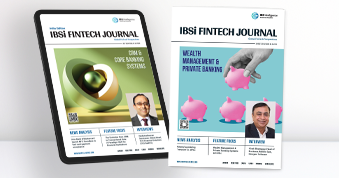
- Most trusted FinTech journal since 1991
- Digital monthly issue
- 60+ pages of research, analysis, interviews, opinions, and rankings
Other Related Blogs
October 14, 2026
Agentic AI could transform UK banks – but only if they stop playing it safe
Read MoreRelated Reports

US FinTech Market Landscape & Vendor Analysis 2026
Know More
Global Digital Banking Market Landscape & Vendor Analysis Q2 2026
Know More
Wealth Management & Private Banking Systems Report Q4 2025
Know More
US FinTech Market Landscape & Vendor Analysis 2026
Know More