 Cedar-IBSi FinTech Labs
 Analyst Briefings
 Get in touch
 Back
Back
Connected payments drive next phase of FinTech growth in Asia-Pacific
By Parth Prabhudesai

The Asia-Pacific FinTech industry is entering a new phase of expansion driven by connected payments infrastructure, with Internet of Things (IoT) and point-of-sale (POS) technologies emerging as some of the fastest-growing segments in the regional digital payments ecosystem. While mobile applications continue to dominate transaction activity, FinTech providers are increasingly investing in embedded and device-based payment systems as consumer behaviour shifts toward seamless and always-on commerce experiences.
According to recent industry research, mobile applications accounted for 72.62% of the Asia-Pacific FinTech market in 2025, underlining the region’s continued dependence on smartphone-led financial services. However, POS and IoT-enabled payment systems are projected to record the fastest growth through 2031, with a compound annual growth rate (CAGR) of 23.72%.
The growth reflects rising adoption of contactless and integrated payment infrastructure across retail, transport, and consumer technology ecosystems. Merchants across Asia-Pacific are increasingly deploying smart payment terminals capable of supporting QR code transactions, near-field communication (NFC), biometric authentication, and digital wallet integrations through a single system.
The trend is particularly visible in Southeast Asia, where smaller merchants are accelerating digital payment adoption without relying on traditional banking infrastructure. In markets such as Singapore and Malaysia, hawker centres and wet markets are increasingly using smartphone-based POS systems to lower hardware costs and expand payment acceptance. In Indonesia, small neighbourhood stores known as warungs are rapidly integrating QR-based payment systems connected to multiple financial networks.
Beyond retail payments, IoT-enabled finance is expanding into connected consumer ecosystems including smart home devices, wearable technology, and connected vehicles. Financial institutions and FinTech firms are viewing these channels as new transaction touchpoints capable of embedding payments directly into daily consumer activities.
At the regional level, China remained the largest FinTech market in Asia-Pacific during 2025, accounting for 40.12% of total market share. The country continues to be dominated by Alipay and WeChat Pay, although tighter regulations around data sharing and cross-border payments are gradually reshaping growth dynamics.
Meanwhile, India is projected to be the region’s fastest-growing FinTech market through 2031, with an expected CAGR of 27.25%. Growth is being supported by the rapid scale of the Unified Payments Interface (UPI), which now processes more than 100 billion transactions annually. Regulatory initiatives led by the Reserve Bank of India are also encouraging innovation in digital lending, embedded finance, and payment infrastructure.
The report further noted that Southeast Asian markets collectively accounted for approximately 25% of regional FinTech activity, reflecting the growing importance of ASEAN economies in shaping Asia-Pacific’s digital finance landscape.
Despite the rapid expansion of mobile and IoT payments, browser-based financial platforms continue to play a key role in business-to-business finance, particularly in treasury management, reporting systems, and enterprise payment workflows.
Overall, the research suggests that the next phase of FinTech growth in Asia-Pacific will increasingly be driven by invisible and embedded payment experiences. As IoT ecosystems mature and digital infrastructure expands, FinTech providers are expected to compete not only through mobile apps but through the ability to integrate payments seamlessly across connected devices, commerce environments, and real-time financial ecosystems.



IBSi FinTech Journal
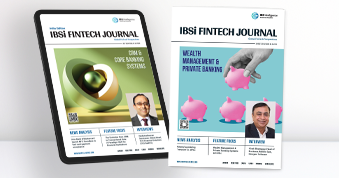
- Most trusted FinTech journal since 1991
- Digital monthly issue
- 60+ pages of research, analysis, interviews, opinions, and rankings
Other Related News
Related Reports
US FinTech Market Landscape & Vendor Analysis 2026
Know More
Global Digital Banking Market Landscape & Vendor Analysis Q2 2026
Know More
Wealth Management & Private Banking Systems Report Q4 2025
Know More
US FinTech Market Landscape & Vendor Analysis 2026
Know More