 Cedar-IBSi FinTech Labs
 Analyst Briefings
 Get in touch
 Back
Back
Legacy Tech holds back banks in Saudi and UAE
By Vriti Gothi

More than half of financial institutions in Saudi Arabia and the United Arab Emirates say legacy technology has caused them to miss business opportunities, underscoring the structural challenges facing the region’s fast-growing digital banking sector, according to a new study released by infrastructure provider Stitch.
The findings come as the GCC digital banking market is projected to expand from $12.7 billion in 2025 to $47.6 billion by 2032, reflecting rising demand for digital payments, lending, deposits and embedded finance solutions. However, fragmented technology stacks and reliance on ageing core systems are limiting institutions’ ability to capitalise on that growth.
The study shows that while 87% of banks across the region now rely on external vendors, this has often resulted in modern applications being layered onto legacy infrastructure rather than fully replacing it. In the UAE, where vendor adoption reaches 94%, the proliferation of third-party platforms has increased operational complexity rather than reducing it.
Across institution types, 70% of exchange houses and financing companies, 76% of FinTechs, and 50% of banks reported that their current technology setup has led to missed business opportunities. More than one in five respondents described their systems as outdated or difficult to upgrade. Over 60% of institutions offering lending products continue to operate exclusively on legacy systems, highlighting the modernisation gap in one of the most infrastructure-intensive areas of financial services.
Dependence on third-party providers remains high. 73% of Saudi institutions and 66% of UAE institutions said they are heavily reliant on vendors for product launches and updates. Among FinTechs, that figure rises to 80%, with many tied to vendor release cycles rather than internal development roadmaps.
“Everyone talks about digitisation and AI adoption across the sector, but the reality is that legacy and fragmented systems still sit at the heart of all institutions,” said Mohamed Oueida, Founder and CEO of Stitch. “They slow things down, limit progress, and drain budgets. As the MENA region continues its unprecedented progress, modern stacks and a unified operating system unlock a new dimension of opportunity and growth.”
Modernisation is firmly on the agenda. In Saudi Arabia, where the digital banking market generated $1.09 billion in revenue in 2025 and is expected to reach $3.59 billion by 2033, 84% of financial institutions plan to upgrade their technology within the next 12 months. In the UAE, 78% have similar plans. Yet high switching costs, long-term contracts, regulatory considerations and concerns about downtime remain significant barriers.
The study indicates growing support for consolidation. Seventy-three percent of Saudi institutions and 66% of UAE institutions believe a single unified vendor would deliver more value than managing multiple disconnected platforms. Expected benefits include improved customer experience (52%), faster product launches (50%), easier management (50%), and lower maintenance costs (42%).
The findings reflect a broader regional shift toward infrastructure rationalization as institutions seek greater control over product development cycles and cost structures. As competition intensifies and regulatory expectations evolve, the ability to modernize core systems without disrupting operations is emerging as a critical determinant of competitiveness across the Gulf’s financial services landscape.


IBSi FinTech Journal
- Most trusted FinTech journal since 1991
- Digital monthly issue
- 60+ pages of research, analysis, interviews, opinions, and rankings
Other Related News
Related Reports
US FinTech Market Landscape & Vendor Analysis 2026
Know More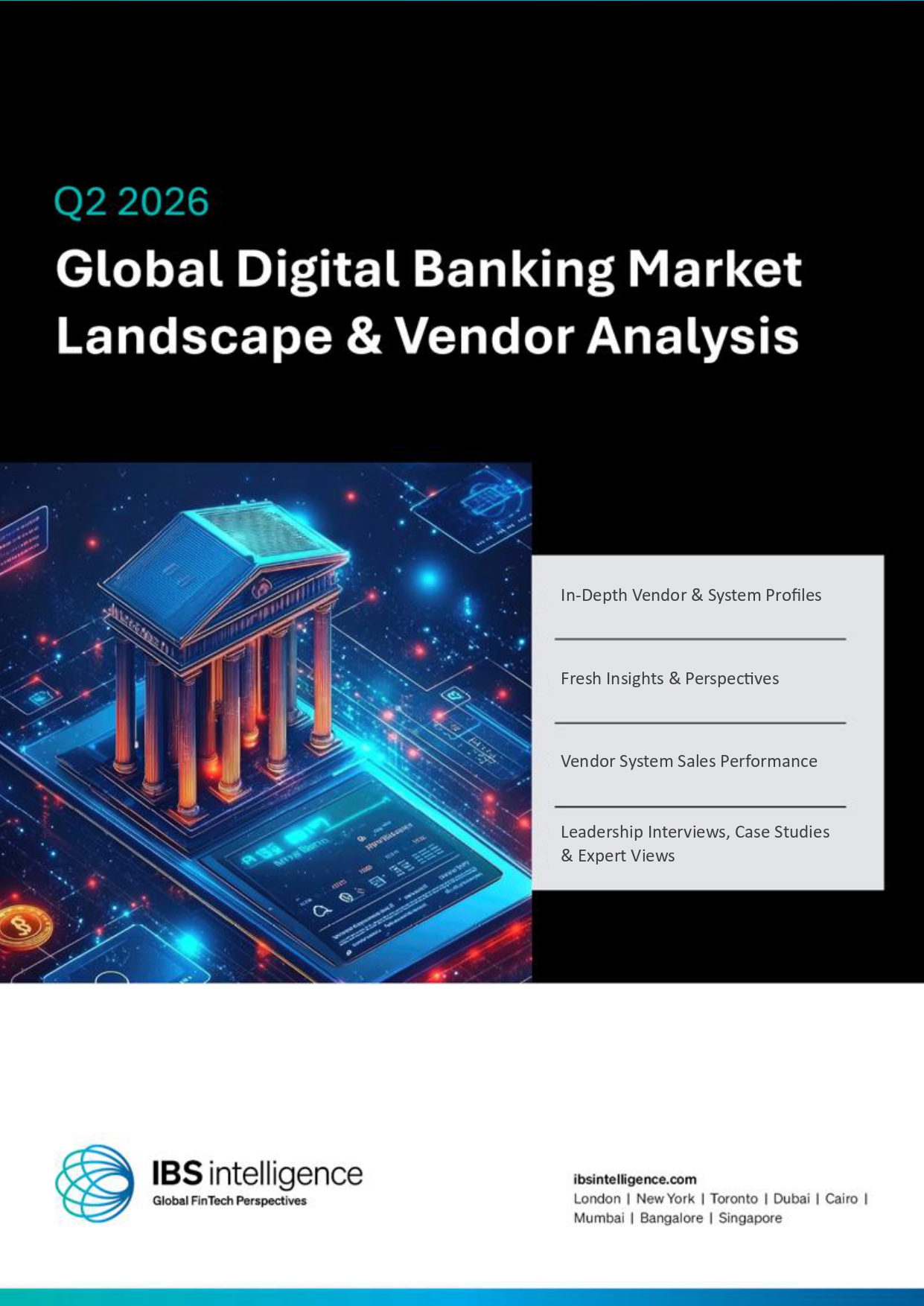
Global Digital Banking Market Landscape & Vendor Analysis Q2 2026
Know More
Wealth Management & Private Banking Systems Report Q4 2025
Know More
US FinTech Market Landscape & Vendor Analysis 2026
Know More