 Cedar-IBSi FinTech Labs
 Analyst Briefings
 Get in touch
 Back
Back
How technology is simplifying home loans: Interview with Amit Prakash, Co-founder & CBO, Urban Money
By Vriti Gothi

As India’s mortgage market faces long-standing inefficiencies, borrowers and lenders grapple with fragmented processes and slow approvals. In this exclusive interview, Amit Prakash, Co-founder & CBO, Urban Money, explained how its shift from a lending-led model to a full-stack property finance platform—leveraging technology, structured workflows, and advisory-led services is simplifying the mortgage journey, improving transparency, and accelerating approvals.
Urban Money has evolved from a lending-led offering into a full-stack platform within property finance. What structural gaps in mortgage distribution prompted this shift, and how are you addressing them differently now?
Mortgage distribution in India has traditionally been fragmented, with borrowers navigating multiple intermediaries, lender-specific requirements, and largely manual processes. One of the key structural gaps was the absence of an integrated borrower journey. Most existing models focused only on loan sourcing or interest rate comparison, without addressing eligibility assessment, documentation preparedness, property linkage, or post-sanction coordination.
Another gap was information asymmetry. Borrowers often entered the process without clarity on approval likelihood or product suitability, while lenders received inconsistent or incomplete applications. This resulted in longer processing times, higher rejection rates, and a lack of predictability for all stakeholders.
Urban Money’s transition toward a full-stack property finance platform was a response to these inefficiencies. Rather than functioning only as a loan distribution layer, the focus shifted to building structured workflows that connect discovery, advisory, lender matching, documentation management, and fulfilment. The objective was to bring greater transparency and consistency into mortgage origination while aligning financing decisions more closely with the property transaction itself. This approach enables us to engage earlier in the journey and offer a more standardised experience for both borrowers and lenders.
Digital mortgage origination is increasingly dependent on API-led KYC, income verification, and consent-based data access. Which parts of this workflow are genuinely transforming outcomes versus simply digitising existing friction points?
API-led digitisation has improved efficiency across several stages of mortgage origination. Identity verification, PAN validation, credit bureau checks, and document collection have become faster and more reliable, reducing manual effort at the entry level.
However, not all digitisation translates into transformation. In some cases, APIs have only replicated existing steps in digital form without simplifying decision-making. For instance, income verification through bank statements is useful, but its impact is limited unless lender-specific credit policies are dynamically applied to those insights.
Meaningful transformation occurs when verified data is combined with rules-based eligibility engines and consent-driven financial insights. When data is used to guide borrowers on approval probability, product suitability, and documentation readiness, it improves outcomes for both lenders and customers. Similarly, real-time status tracking and two-way data exchange between platforms and lenders reduce rework and uncertainty.
Areas such as property documentation and exception handling still face friction, as they require interpretation beyond standard data inputs. The distinction lies in whether technology enables better decisions or merely speeds up existing checkpoints.
As part of a larger real-estate ecosystem, how does Urban Money balance platform-driven customer intent with independent demand, especially when lenders or borrowers operate outside Square Yards’ funnel?
While Urban Money is part of a broader real estate ecosystem, it also operates independently of any single demand source. A significant share of mortgage demand originates outside structured property platforms, including self-sourced buyers, refinancing customers, and borrowers approaching lenders directly.
To address this, Urban Money has built acquisition and engagement models that function alongside platform-driven intent. These include digital discovery, partner-led referrals, and direct borrower engagement. From a lender’s perspective, the focus remains on being channel-agnostic and supporting borrowers regardless of how they enter the ecosystem.
Balancing these sources requires separating intent generation from fulfilment. Platform-driven customers benefit from contextual property insights, while independent borrowers receive structured advisory and eligibility assessment. A common backend workflow ensures consistency in lender interaction and customer experience, regardless of the entry point. This allows Urban Money to participate across the mortgage value chain without being dependent on a single funnel.
The mortgage journey in India still has several touchpoints requiring manual validation. Where do you believe pure technology can meaningfully reduce time-to-sanction, and where will human intervention remain necessary?
Technology can significantly reduce timelines in areas that are data-driven and rule-based. Eligibility assessment, KYC, income analysis, credit bureau checks, and preliminary product matching are well-suited for automation and can materially improve time-to-sanction when integrated effectively.
Document management is another area where technology adds value. Digitised uploads, automated checks for completeness, and real-time tracking reduce delays and uncertainty. Workflow automation also helps ensure cases move predictably through internal and external checkpoints.
However, certain stages will continue to require human judgment. Property valuation, legal due diligence, and exception-based credit decisions often depend on contextual assessment that cannot be fully automated. Borrower advisory, particularly for self-employed customers or complex financial profiles, also benefits from human interaction. Technology and human expertise should be viewed as complementary. Technology provides scale and consistency, while human intervention addresses ambiguity, exceptions, and trust.
Looking ahead, what signals do you see in customer behaviour, lender expectations, or regulations that indicate how India’s mortgage ecosystem will evolve over the next 2–3 years?
Customer behaviour indicates growing comfort with digital engagement, alongside higher expectations for transparency around eligibility, pricing, and timelines. Borrowers are more informed and increasingly unwilling to navigate opaque or repetitive processes.
Lenders are placing greater emphasis on data quality, predictability of conversion, and operational efficiency. There is a noticeable shift toward partnerships that deliver structured and compliant pipelines rather than just higher volumes. This is likely to drive deeper platform integrations and standardised data exchange.
From a regulatory standpoint, continued focus on consent-based data sharing, digital documentation, and compliance automation will influence how mortgages are originated and processed. While core risk assessment frameworks will remain conservative, incremental regulatory clarity around digital workflows should reduce friction.
Overall, the mortgage ecosystem is likely to evolve through gradual convergence rather than disruption. Technology, advisory, and institutional processes are expected to align more closely, creating a journey that is more transparent and efficient while remaining grounded in prudent risk management.


IBSi FinTech Journal
- Most trusted FinTech journal since 1991
- Digital monthly issue
- 60+ pages of research, analysis, interviews, opinions, and rankings
Other Related News
Related Reports
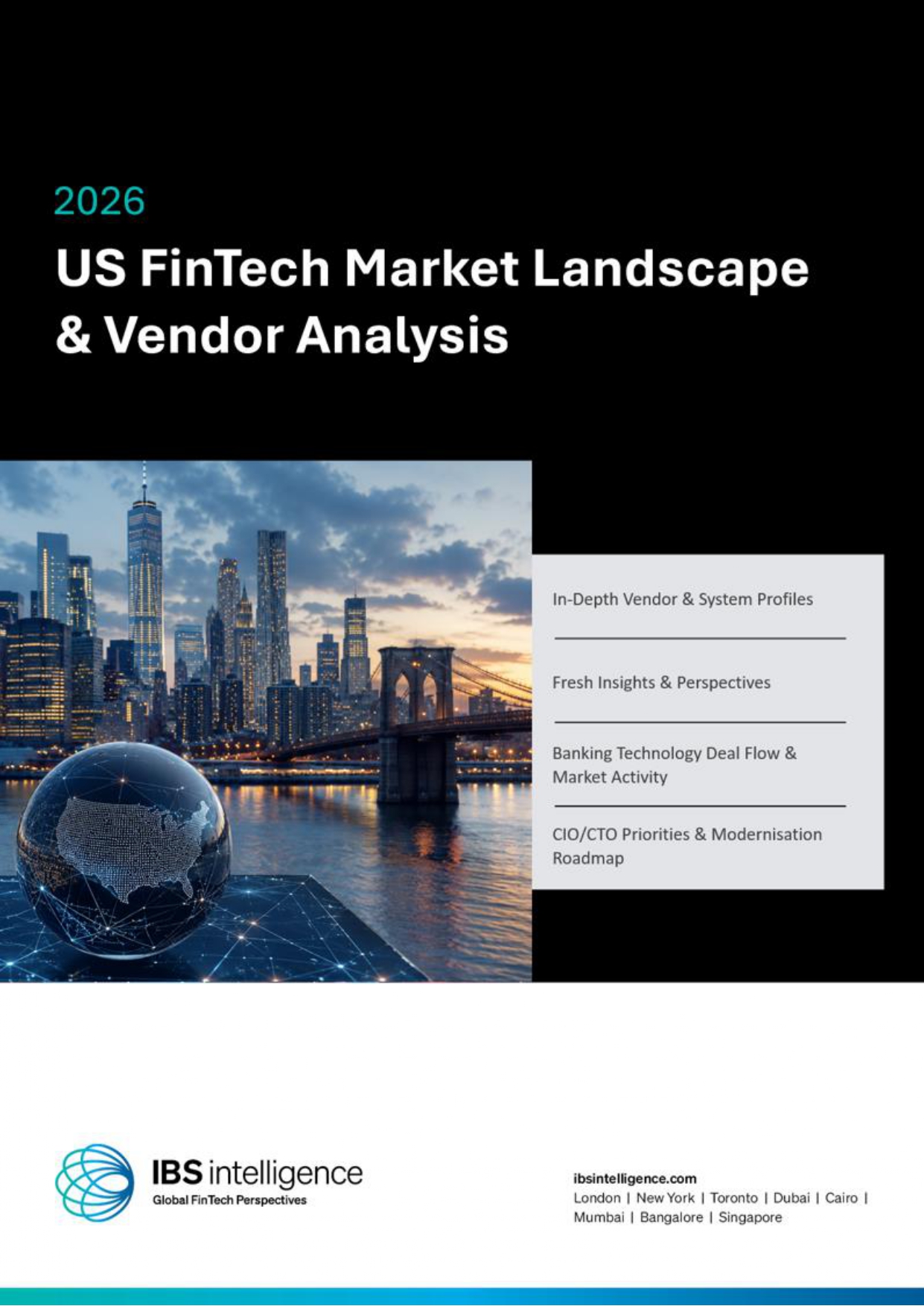
US FinTech Market Landscape & Vendor Analysis 2026
Know More
Global Digital Banking Market Landscape & Vendor Analysis Q2 2026
Know More
Wealth Management & Private Banking Systems Report Q4 2025
Know More
US FinTech Market Landscape & Vendor Analysis 2026
Know More