 Cedar-IBSi FinTech Labs
 Analyst Briefings
 Get in touch
 Back
Back
FinTech funding matures as markets demand profitable growth
By Vriti Gothi

The global FinTech funding environment is entering a more disciplined and structurally different phase, as investors reassess risk, returns, and the sustainability of growth in a post-blitzscaling era. After years of abundant capital and aggressive expansion strategies, venture activity across FinTech is increasingly shaped by resilience, capital efficiency, and measurable business fundamentals rather than headline growth alone.
This shift reflects a broader reset in venture capital markets, but it carries particular implications for FinTech, a sector that sits at the intersection of technology innovation, regulatory oversight, and financial risk. Rising compliance costs, longer sales cycles with financial institutions, and heightened scrutiny from regulators have made capital efficiency a strategic necessity rather than an operational preference.
Across early- and growth-stage FinTech companies, funding rounds are becoming more selective and milestone-based. Investors are placing greater emphasis on unit economics, customer lifetime value, and predictable revenue streams, especially in core segments such as payments infrastructure, lending platforms, regtech, and banking-as-a-service. Startups are increasingly expected to demonstrate not just product adoption, but also the ability to monetise sustainably within realistic timeframes.
“The venture landscape is undeniably shifting from the ‘blitzscaling’ era towards a model prioritising resilience, capital efficiency, and demonstrable value,” said Mohammad Azhar, Senior Business Advisor at Greenr Sustainability Accelerator by TechnoServe. “We anticipate a more selective, milestone-driven funding environment where investors lean into structured rounds and a diversified capital mix, moving beyond traditional VC to include growth debt and revenue-based financing.”
This evolution is driving meaningful changes in how FinTech founders approach capital strategy. Rather than relying exclusively on equity funding, many companies are incorporating non-dilutive instruments such as venture debt, revenue-based financing, and structured credit facilities. These tools are helping founders extend runway, reduce dilution, and align capital deployment more closely with revenue generation, particularly in B2B FinTech models where cash flows are more predictable.
Investor appetite is also becoming more nuanced across FinTech sub-sectors. While consumer-facing FinTechs are facing tougher scrutiny due to margin pressure and customer acquisition costs, areas such as AI-driven financial services, climate and sustainability-linked FinTech, healthtech payments, and deeptech infrastructure are attracting sustained interest. These verticals are seen as requiring deeper domain expertise and offering more defensible moats through proprietary data, regulatory complexity, or long-term institutional partnerships.
At the same time, expectations around exits are being recalibrated. The era of frequent, large-scale FinTech IPOs appears to be giving way to a more selective public markets pipeline. Market participants increasingly expect liquidity to come through strategic mergers and acquisitions, often driven by incumbent financial institutions, global technology firms, or scaled FinTechs seeking complementary capabilities. Selective public listings may still occur, but they are likely to favour companies with strong profitability visibility and regulatory maturity.
For FinTech founders, the implications are clear. Growth strategies must now balance innovation with financial discipline, prioritising product depth, operational efficiency, and sustainable expansion over rapid geographic or customer scale. Investors, meanwhile, are positioning themselves as longer-term partners, focusing on governance, risk management, and capital stewardship alongside growth.
As the FinTech sector moves toward 2026, success is increasingly defined by adaptability rather than speed. Companies that can align technological differentiation with sound financial fundamentals, while navigating a more complex capital environment, are likely to emerge as the next generation of durable FinTech leaders.



IBSi FinTech Journal
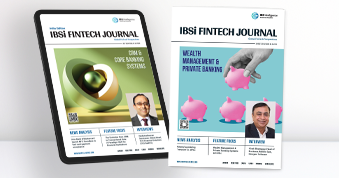
- Most trusted FinTech journal since 1991
- Digital monthly issue
- 60+ pages of research, analysis, interviews, opinions, and rankings
Other Related News
Related Reports
US FinTech Market Landscape & Vendor Analysis 2026
Know More
Global Digital Banking Market Landscape & Vendor Analysis Q2 2026
Know More
Wealth Management & Private Banking Systems Report Q4 2025
Know More
US FinTech Market Landscape & Vendor Analysis 2026
Know More